|
Big congratulations to Mr. Drysdale (Pickwick's Mr. High Falutin') for finishing his championship at the Columbiana shows! 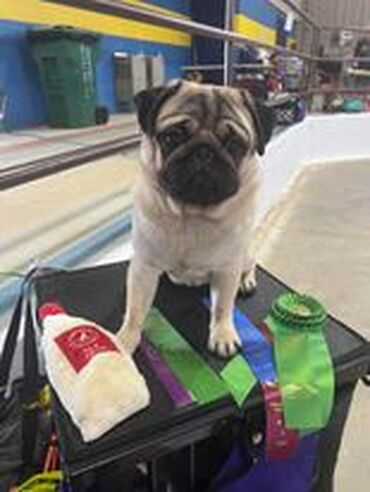 He won Winners Dog every day he entered in the classes (out of Bred By class) over some really nice dogs. He also won Best of Winners and Best of Breed Owner Handler. Eliza won Winners Bitch a couple of days as well, plus Best of Opposite Sex. It is rare that both Jeff and Amy are able to attend a show together because of work schedules and kennel duty with the other members of the grumble so we had to attempt a win photo with both Drysdale and Eliza the day they each won Winners. Good thing the photographer didn't choose the photo when Drysdale was inappropriately sniffing Eliza's back end. lol. 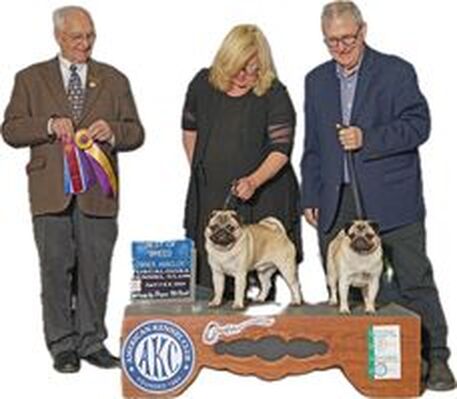 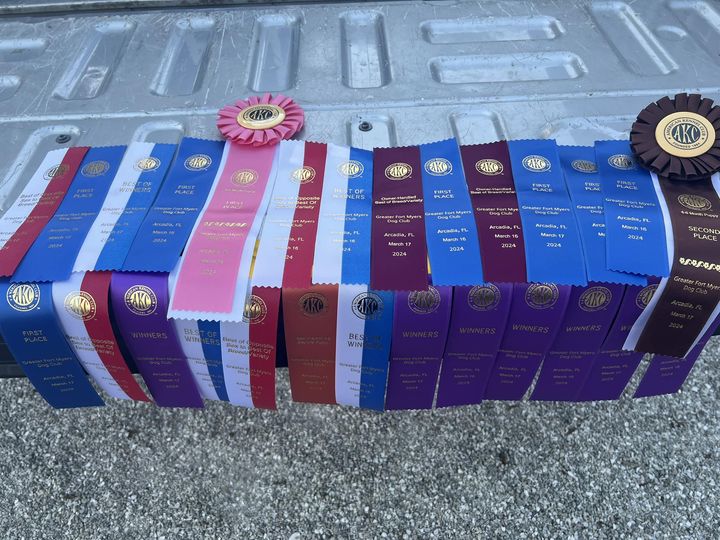 Beatrix also contributed to the grand collection of ribbons and wins, winning Best of Breed in the 4-6 Beginner Puppy Class each day, plus placements in the Toy Group (including 1st place one day!) To quote the judge, she was a rockstar and rocked the ring! Each day she got better and better and by the last day she was like a pro! She was such a fast learner and enjoyed meeting all the different dogs and people. We failed to post her wins last month in Jackson, Mississippi which included Best of Breed, Best of Winners, Best of Breed Handler, against some tough competition. Here she is in Jackson, MS: 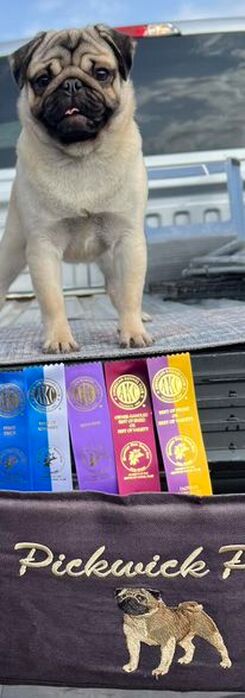 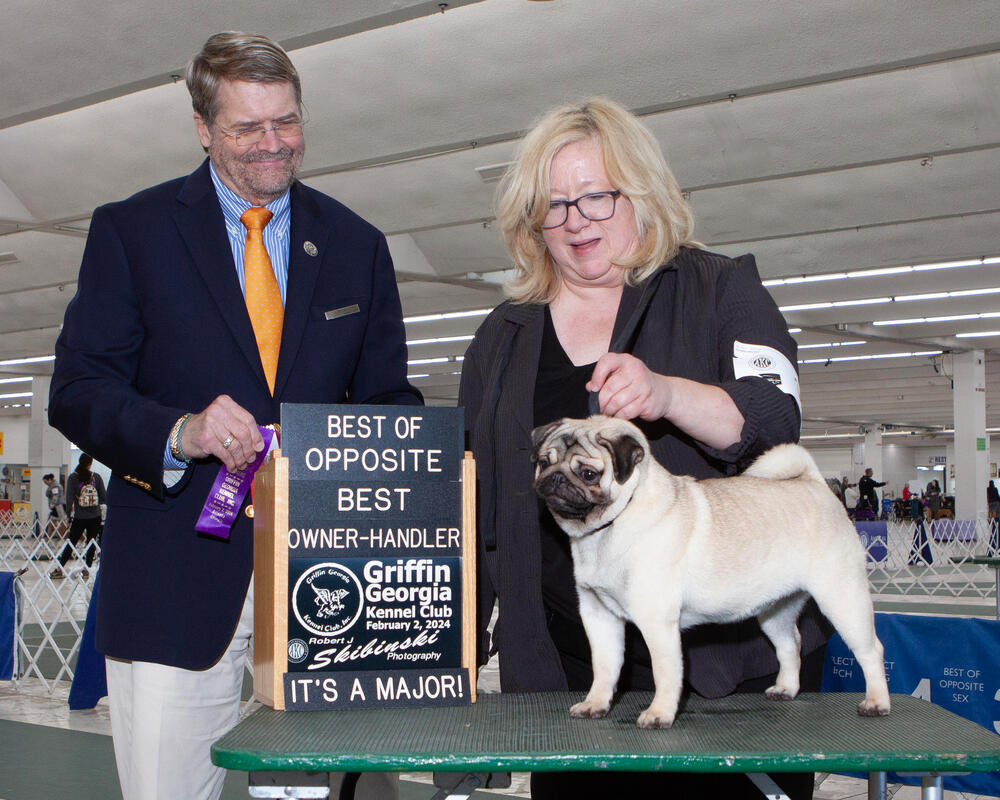 And then the month before that, in February, she won a huge win against a huge lineup in Atlanta under judge Randy Garren, including Best of Opposite, Best of Breed Owner Handler, and Best of Winners. 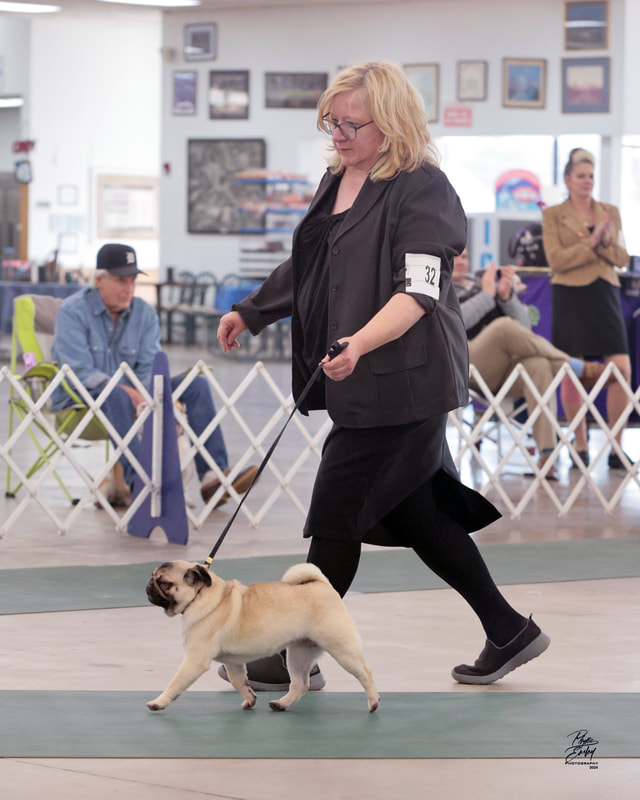 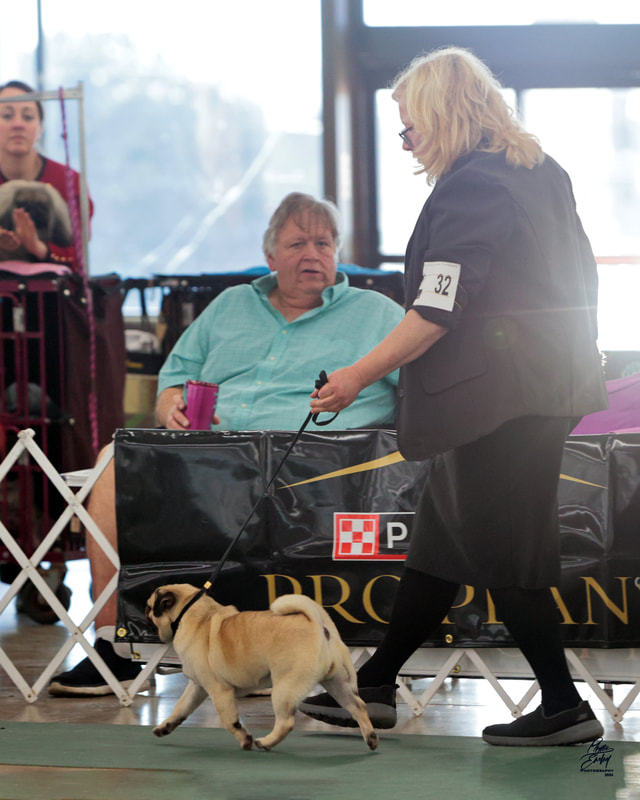 Eliza just needs 1 more single point and then she will become CH Pickwick's Too Generous to Trifle With. Hopefully, she will finish in Montgomery next week!
0 Comments
Eliza, Mr. Drysdale, Beatrix, and Tiggy took a long drive with Amy down to Arcadia, Florida and returned home with a ton of wins and ribbons. On the way down we stopped in Tampa to drop off Jagger to his new companion home. He is our boy we brought back from Spain as a show prospect but, alas, he turned out to be an amazing companion pug instead so he is living the life now with his new family and getting so much love and attention. Here are some shots of Jagger, (they are calling him Mr. Jones now, too), bred by Mireia Cabre of Diabolbric Pugs, Spain: We tent camped at a nearby State Park (HIGHLY recommend Lake Manatee State Park) and it was just magnificent listening to the sounds of different birds and seeing so much wildlife all around. (Yes! lots of "beware alligators" signs .... I'm pretty sure we heard one, but we never saw one). It was an adventure for everyone and the campfires were a hit, too. There were TWO shows each day, Saturday and Sunday. It was EXHAUSTING but worth every second. Mr. Drysdale won Winners Dog all 4 shows, Eliza won Winners Bitch all 4 shows, and they each took turns sharing the Best of Winners award. Eliza also won Best of Opposite Sex. Then, of course, we had Tiggy and Beatrix's first BPUP (4-6 Month Puppy Class). Not only did they each win Best of Breed, but Beatrix won 1st place in the Toy Group and Tiggy won 2nd place. It was a hoot, but as I told the judge, "you have to start somewhere!" lolz. Yep, Beatrix's judge was so amazing and just worked the photo shoot with a spontaneous sit when the totally green, 4 month old puppy wouldn't hold a stack. Best win photo ever if you ask me! And yet another fabulous surprise on the trip was when Beatrix and Tiggy's brother Jeremy (new name Louie) and his parents drove over from Sarasota to the show to visit! It was so much fun and I honestly believe they remembered each other. We got some great photos as well (thank you Erin!) . . . . 2 Shows per day was definitely exhausting, though ... especially for the 4 month olds. The dogs enjoyed grilled tripe for dinner and treats! And Amy enjoyed campfire breakfasts. We are going to miss Tiggy and Beatrix so much. As soon as we got back from Florida, we washed Tiggy and drove to meet her new owner who is a retired veterinarian who used to breed and show pugs. She will hopefully be headed toward the obedience ring for some fun things to do and she is joining another beautiful big pug brother. Beatrix will be headed to live with an amazing mom who she met in Florida and also joining a big bro pug named Tug. They have found such amazing homes but we really wanted to keep them. Sadly, we are told over and over "you can't keep them all". Sigh. Eliza, Mr. Drysdale, Tiggy, and Beatrix all joined Amy on a trip to Florida for a few day. They had a chance to socialize at a dog show and experience all sorts of new adventures (tent camping! rain, and more).
Amy had a chance to chat with some experts at the dog show for guidance in direction of breeding program and learned so many helpful tips. It rained for the bulk of the camping trip, however, so that inspired this 'composition' (on Garage band) entitled "Damp is a 4 Letter Word" lolz! Here are a few highlights from their adventures! (video coming soon) Margery A. Shriver of Sheffield Pugs (d. 2015) felt that the biggest problem in the pug breed continued to be incorrect shoulder structure and the accompanying faults of low shoulders and often straight stifles (Interview in The New Pug book by Shirley Thomas, 1990): "An astonishing number of Pugs currently being shown (and bred from) have steep shoulders and very short upper arms. This often makes them loose in the elbows and too wide in front, as well as causing a topline low in shoulders and high in rear. The length of the shoulder blade and length of the upper arm should be approximately equal, with the shoulder laid back so that the neck blends smoothly into the back. A quick check is to feel the width between the shoulder blades at the withers -- good shoulders are about 2 fingers apart, while steep shoulders can be as much as four fingers apart. A straight front is more than two straight legs. Those legs must be attached to correct shoulder assembly in order to move freely. Correspondingly, the rear legs must have adequate bend of stifle to balance out movement. It should be noted that a Pug with wide, muscular thighs (as desired) might appear to have a slight bend of stifle, but if you identify the points of the knee and the hock, you will see that the angulation is there." Shriver's biggest frustration with Pugs was the incorrect movement she saw prevalent in the ring. "It is the result of the above-mentioned structural flaws. When a Pug moves toward you, his hind feet should not be visible on the outside of the hind leg. No judge of working or sporting dogs would tolerate in those breeds the movement that is so commonly accepted in Pugs. Pug structure and movement belong in the same category as normal dogs, a majority of breeds, not in the same category as exceptions for normally structured dogs." She also notes that a Pug moving away from you in wet grass often moves in a sloppy fasion even though it may move perfectly true on a hard surface. A matter of controversy is the "pug roll" which Margery described as just a springy or jaunty rear action that should not prevent the Pug from double-tracking. 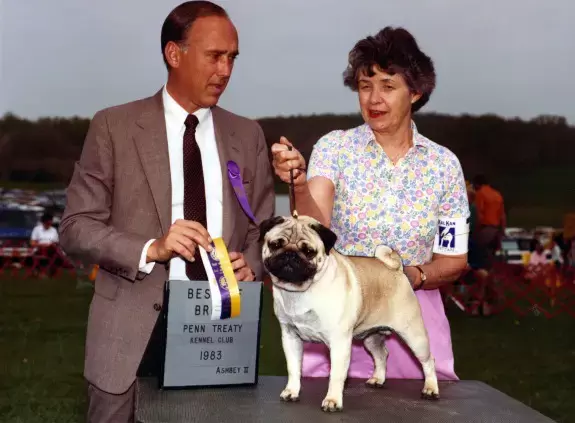 CH Sheffield's Little Red Wagon: A fawn dog, 23 lbs, light golden fawn and good shoulders, moderate length of back, high tail set, soft expression, very dark eyes, black nails, very wide muzzle and deep underjaw, good strong rear with good angulation, and extremely good rear movement. His detriments were a somewhat muscled-up front, legs that weren't always conducted well, and some of his pups did not have much pigment around their eyes and/or nose-roll, while some had light nails. "Reddy's pups just about always are a clear light fawn, no matter the color of the mother, and they usually have a sweet, soft expression. Shriver would not recommend him for a bitch who was washed out and needed pigment however ears always get black. The size of the pups usually is dominated by the bitch. 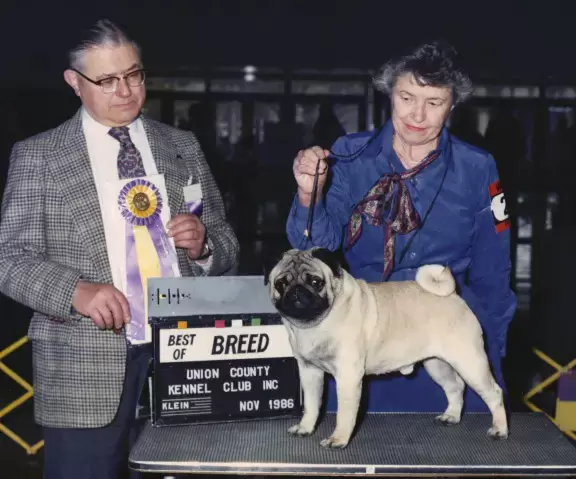 CH Sheffield's Jersey Bounce: A fawn dog, 23.5 lbs, orange apricot color, well pigmented, with a short back, very high tail set, very straight front and good shoulders. He has a lovely arch of neck, angulated rear, clear coat color, lots of pigment, dark eyes and black nails. Shriver would not breed a smutty bitch to Bounce as his mother was very smutty. Some pups turned out quite small although he is rather large. Puppies are quite a bit like Stuff'N' Nonsense (his Grandfather) and might have rather furry coats. 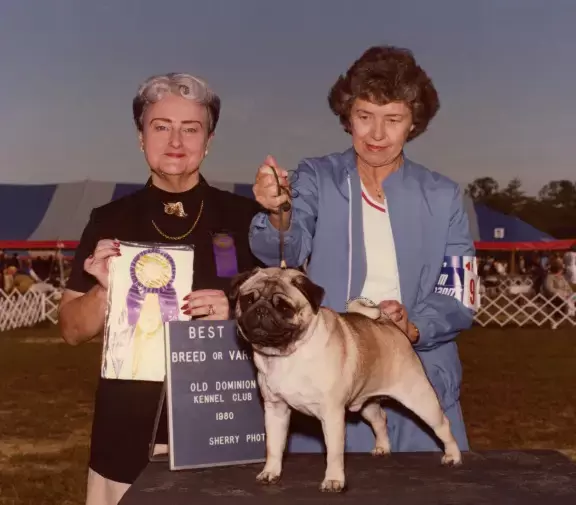 CH Stuf 'N Nonsense: A fawn dog, 22 lbs with an orange-apricot color, very heavy bone, short back, good shoulder assembly and straight front. He had a thick-set neck, very dark eyes and pigment, black nails moderate rear angulation and a large round head. He was predominant for good bone, short bodies and good fronts, while bitches dominate wrinkles and usually size, color and coat type. Note: Little, short, cloddy Pugs often turn up for several generations.
In AKC conformation dog shows points toward a championship can not begin to be counted until the dog is at least 6 months of age. Eliza, Pickwick's Too Generous to Trifle With (from the Jane Austen litter) won all sorts of prizes before she was 6 months of age (including Best of Opposite Sex at the Pug Nationals in the 4-6 month Beginner Puppy class, and Best in Show in the BPUP just before that in Knoxville, TN), but at her very first 'official' show in Jackson, MS, she earned her first major win (thank you judge Jon Cole) with Winners Bitch, Best of Breed Owner Handler, and also won Best of Breed the first day of the show cluster. Her 2nd official show was the beginning of February in Atlanta and, for this major win, she had to beat out over 20 bitches and some pretty amazing pugs. She also won Best of Opposite Sex, Best of Breed OH and went onto win 3rd place in the Toy Group! Go Eliza. She and her sister Emma had a blast socializing and seeing all the sites at this huge show. Probably their favorite part was the treats and fun time in the Airbnb watching old Westerns with their mom ;) (At least that was their mom's favorite part of the trip!) So now, after just 2 show clusters, Eliza just needs a single point (or perhaps if my math is correct?) she has finished at 8 months with 2 show weekends. Wow. Recently there have been many reports from pet owners dealing with their pets becoming ill and dying, suspected from their pet food. 397 dogs that are sick or have died, suspected from their pet food. 129 cats that are sick or have died, suspected from their pet food. Of these animals, 222 listed only Purina pet foods, but there are other brands being reported. While Purina denies any problems, there is no proof yet or evidence that the illnesses/deaths are related to the food, but people are working together to have foods tested. While there are no recalls yet with these recent scares, possibly never will be, it is interesting to note that just recently there were 2 recalls on Purina. 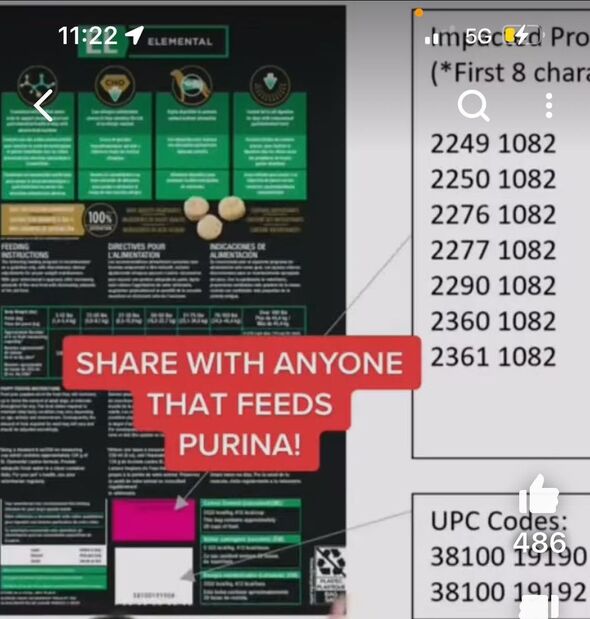 1) Nestle Purina Petcare Company voluntarily recalled Purina Pro Plan Veterinarian Diets EI Elemental Dry Food)= because of elevated vitamin D levels. Too much vitamin D can lead to kidney failure and a whole host of other health issues. 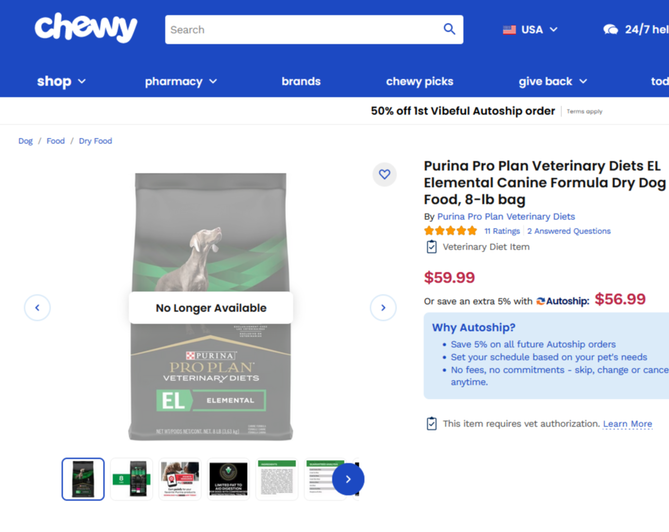 2) Additionally, Nestle recall Purina Pro Plan Veterinary Diets EN Gastroenteric Low Fat Wet Dog Canned Food due to labeling error.  Just because a food has been "safe" in the past does not mean that there haven't been changes in the ingredients (FDA does not require pet food companies to change labels with many changes) and, of course, it could be something even worse such as a contaminated machine in one of the factories which produce products used in all sorts of different major brands. 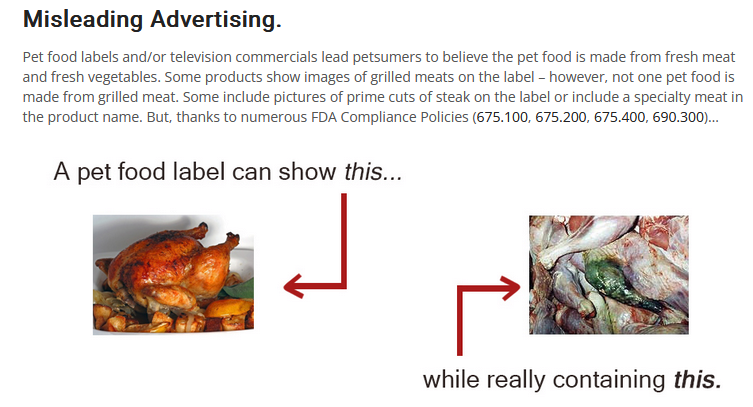 Purina Pro Plan is the most common food reported. It is being recommended that if you or someone you know is feeding this food, stop immediately, and do not wait until your pet gets sick or Purina issues a recall. It seems to be from all different types of Purina, with Purina Pro Plan being the most common. If you feed Purina, (and be aware that many other brands are made in the same factories as Purina so this may be far reaching), and have any issues, it is recommended that you stop feeding, save the pet food, (do NOT release it to Purina in any circumstances), contact your vet and request a copy of your pet's medical records, ask the vet to report your concerns to Purina (good luck with that - many vets recommend Purina). Report it to the FDA (https://truthaboutpetfood.com/report-a-suspect-risk-pet) and report it to Purina (https://www.purina.com/contact-us). Do NOT agree to send them the food. If you feel compelled to do so, only send a small portion. Keep the rest of the food IN THE FREEZER in case it needs to be tested later. Document your conversation with Purina. Purina may eventually say they will pay your vet bills and reimburse you for your pet food. If you agree to this they will ask you to sign a form which will prohibit you from taking action. If there is a class action lawsuit you will be unable to join if you do this or if you want to file your own lawsuit. Many people are having their pet food tested, at their own expense of course. (It's not cheap and you have to submit for each thing being tested). https://truthaboutpetfood.com/help-to-check-your-pet-food/) Purina has already been notified by numerous pet owners and they have not done anything to alert unsuspecting pet parents. Initially, they were offering to reimburse the pet owners for their pet ood. Currently, they are offering pet parents $10 in coupons (which is what Hills offered someone for their dead dog) and having a third party contact the pet parents. Already, we are seeing Purina pet food become "unavailable" on the store shelves. 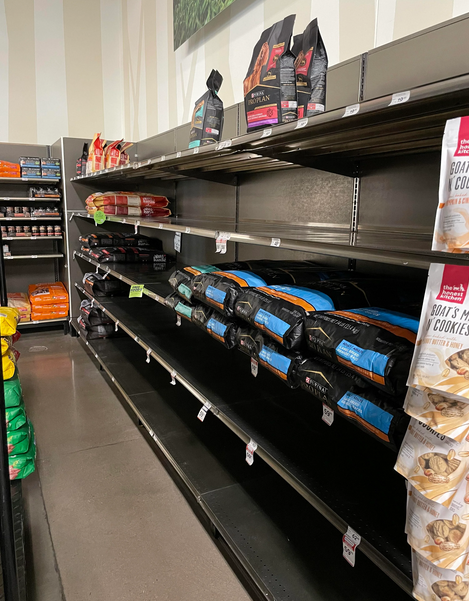 This is called a silent recall. The pet food manufacturer doesn't want to admit there is a problem with the product, so they start pulling the products off the shelves quietly. (Hills did this for 60 days before the recall). So how do you decide what brand to use? The front of the pet food bag will NOT help you choose what's safe -- it's just marketing and propaganda. Pet food regulations state that a pet food label can contain "unqualified claims, either directly or indirectly". Legally, in any form of advertising, a pet food company can lie to you. Did you know that many pet foods contain the euthanasia drug, sodium pentobarbital? 20 years ago the FDA tested a number of dry dog foods and found this drug in foods like Gravy Train, Kibbles 'N Bits, and Ol' Roy. (The results of those studies is documented in Dog Food Samples Used in CVM Pentobarbital Surveys and Analytical Results). 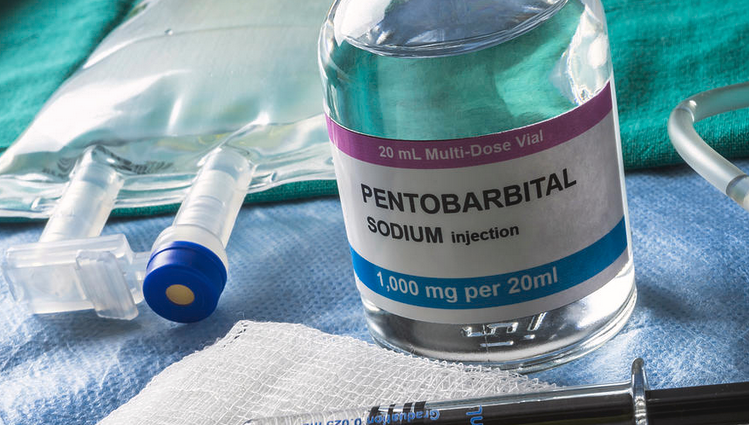 The FDA concluded that: "There appear to be associations between rendered or hydrolyzed ingredients and the presence of pentobarbital in dog food. The ingredients Meat and Bone Meal (MBM), Beef and Bone Meal (BBM), Animal Fat (AF), and Animal Digest (AD), are rendered or hydrolyzed from animal sources that could include euthanized animals." Based on these findings, the FDA wanted to know where the drug was coming from so they conducted species analysis testing on the dog food. The assumed the origin of the pentobarbital was from euthanized dogs and cats or possibly horses. (ick). But their test was never able to identify any species ... including canine, feline, or equine DNA. So, despite these failed tests, and because the FDA found only "very, very low levels" of sodium pentobarbital (parts per billion) in the dog foods, they decided it was a risk they were comfortable living with. Since the FDA didn't believe it posed an immediate danger to pets, their conclusion was at those low levels it was "unlikely to cause them any adverse health effects", so the agency DECIDED NOT TO TAKE A POSITION TO ELIMINATE EUTHANIZING DRUGS FROM PET FOODS AND ANIMAL FEED! So guess what? These foods that contained euthanasia drugs stayed on the market! Not a single one of those illegal pet foods were was withdrawn or recalled from the market. Atleast, today, the FDA states that pentobarbital in any amount -- even in parts per billion -- is illegal in pet food and "any detection of pentobarbital in pet food is a violation of the Federal Food, Drug, and Cosmetic Act -- simply put, pentobarbital should not be in pet food." Perhaps if the FDA had taken a stronger position 20 years ago and required the removal from the market the food laced with pentobarbital, manufacturers would have been sent a stern message. So, pet food companies know that the FDA will not take action over certain 'objectionable practices" in pet food today. Guess what else? Canned pet food may contain material from 3D and 4D animals "regardless of the origin of animal tissues used". The FDA considers it fit for animal consumption even though it is in violation of law: "Pet food consisting of material from diseased animals or animals which have died otherwise than by slaughter, which is in violation of 402(a)(5) will not ordinarily be actionable, if it is not otherwise in violation of the law. It will be considered fit for animal consumption." Even though the FDA is fully aware that dead, dying, disabled, or diseased (4-D) animals are used as animal food, the agency allows its use as long as it's heat-processed (cooked in a can or rendered). 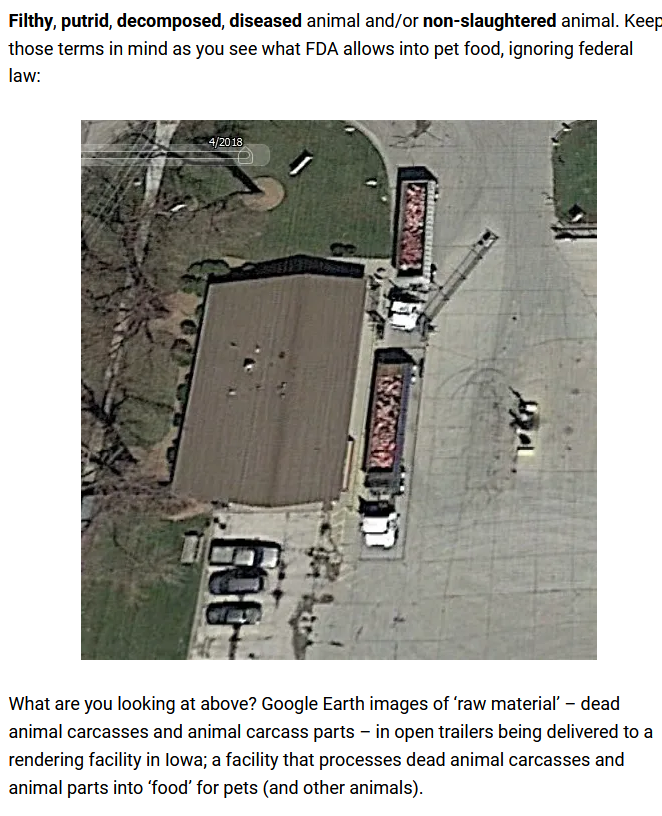 Is there no wonder they find pentobarbital in dog food? The FDA will not consider it objectionable if pet food manufacturers wish to use rendered animal tissues from animals that have died otherwise than by slaughter in pet food. Rendered material is the most likely source of pentobarbital contaminated meat in pet foods today, JUST AS IT WAS 20 YEARS AGO! Perhaps, if the FDA did not allow so many violations of the Federal Food Drug and Cosmetic Act, then pet food manufacturers would have a clear, bright line between what's allowed and what's not: What's legal and what's not. However, so long as compliance policies blur the line b/w these 2 defining points of law, incidences like the one we are facing today will continue into the future. Food and Drug Administration/Center for Veterinary Medicine Report on the Risk from Pentobarbital in Dog Food So how do you decide what brand to feed your dog? Look at the BACK of the pet food bag. (The front only has marketing and propaganda -- pet food regulations state a pet food label can contain "unqualified claims, either directly or indirectly". Legally, in any form of advertising, a pet food company can lie to you. Look at the ingredients on the back. There are 2 grades used in pet food: 1) human edible (food grade) ingredients 2) human inedible (pet grade or feed grade) ingredients Even with studying ingredients (ruling out foods with poultry byproducts, soy, corn, ingredient splitting, without meet as number one ingredient etc. etc.), there can still be problems not listed in the ingredients. For example, even with human grade claims, many pet foods contain chemicals and dyes linked to cancer and serious illness. Some canned foods have a lining inside the can that contains BPA, a chemical scientifically linked to cancer. Petsumer Report reviews tell you which pet food manufacturers use food quality/human food quality ingredients, BPA lined cans, and who uses risky chemicals and dyes. Still, we have to start somewhere and learn how to educate ourselves on how to determine which foods to feed our pets. Start by looking at the first 3 ingredients (which make up the majority of the pet food). "Ingredients whose legal definitions provide quality nutrition are scored, ingredients whose legal definitions include waste-type material or inferior nutrition are not scored." Because ingredients are listed in order of heaviest to lightest, the first three ingredients make up the majority of the pet food. Ingredients whose legal definitions provide quality nutrition are scored, ingredients whose legal definitions include waste-type material or inferior nutrition are not scored. Does it include probiotics? The "friendly bacteria" help to keep the intestinal system working properly. A large % of the immune systems is located in the intestinal system. Shelf life? With any naturally preserved pet food, the nutritional value decreases over time. Companies who make the food in small batches will be fresher than the huge companies. Very often it can take months for the food to even make it from manufacturing to warehousing and then to the retail outlet and then to your pet's bowl. So, even though you just purchased the food it might not be fresh. Pet foods state the expiration or best if used by date but really bagged foods have a shelf life of 1 year to 18 months. So, for example, if you purchased a pet food in May, 2018 and the "Best Used By Date" is 11/18, if its shelf life was 1 year you would know the food was 6 months old when you purchased it. It may not "spoil" in 6 months but some of the nutritional value would be lost. The fresher the better. When comparing ingredient lists - opt for ones with meat and 'real food' top 3 ingredients, no soy, no corn, no wheat, no poultry byproducts. Why no soy? Soy can cause gas and bloating, kidney stones, and thyroid damage in dogs. Bloat, also known as gastric dilation-volvulus, is a serous medical and surgical emergency for dogs. Why avoid corn? As a whole grain, corn is not easily digestible. Corn has a higher glycemic index. It's just not that remarkable with regard to nutrition and minerals. (Low to high: brown rice = 33; corn = 34; barley = 36; oats =43; quinoa = 45; wheat = 48; potato = 51; peas = 53; sweet potato = 55; spinach = 91) What about byproducts? "Unfit for human consumption but fine for pet food"! Animal by-products are what's left of a slaughtered animal after the skeletal muscle meat intended for human consumption has been removed. ("Animal by-products include all parts of a live animal that are not part of the dressed carcass.") This includes parts of an animal which have been "rejected for human use and can be expected to be processed into animal feed." What makes some by-products fit for human consumption and others not can have to do with how they're handled after slaughter. (For example, by-products that are not refrigerated immediately after slaughter but stored for hours in a hot trailer cannot be sold for human consumption, but they can still be legally used for making pet food. On the other hand, rejected waste such as dead farm and zoo animals that have been declared unfit for human consumption can first be rendered into meal ingredients ... THEN BE USED TO MAKE PET FOOD!) Rendering is a process similar to making stew -- except that the stew is intentionally over-cooked. The idea is to start with a stew of by-products and cook away the water. Then skim away the fat and bake the residue. You end up with a concentrated protein powder known as by-product meal. With chicken and poultry there are 2 grades of by-product meals: 1) Feed grade by-product meal 2) Pet food grade by-product meal In a study from 2003, pet food grade by-product meal was found to be; Higher in protein Lower in ash More digestible More consistent In the specific cases of chicken and poultry, there are 2 grades of by-product meals…
So never pay top dollar for any dog food that lists animal by-products near the top of its ingredient list. Never buy any dog food that contains "generic animal by-products" sourced from materials a manufacturer fails to clearly identify. We could be here all day with chemicals to avoid but added synthetic vitamins are never as good as the actual food source. Sugar, salt also need to be further down on the ingredient list. Way down or absent. So, for fun, let's compare 2 labels. First, we'll start with one which has more negatives than positives (well, I can't find any positives): Alpo Prime Cuts Savory Beef Flavor 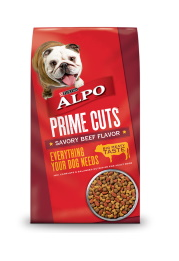 Ingredients: #1 = Ground yellow corn; #2 = meat and bone MEAL; #3 = SOYbean meal Then it goes on: beef tallow preserved with mixed tocopherols, corn gulten meal, egg and chicken flavor, poultry and pork digest, salt, potassium cholride, choline chloride, RED 40, zinc sulfate, ferrous solfate, Vitamin E supplement, L-Lysine monochydrochloride, YELLOW 5, manganese sulfate, Blue 2, niacin, Vitamin A supplement, copper sulfate, calcium pantothenate, thiamine mononitrate (Vitamin B-1), garlic oil, pyridoxine hydrochloride (Vitamin B-6), Vitamin B-12 supplement, riboflavin supplement, riboflavin supplement (Vitamin B-2), Vitamin D-3 supplement, calcium iodate, menadione sodium bisulfite compled, folic acid, biotin, sodium selenite. These are risky and controversial ingredients. Why?
Crude Protein: 18% minimum Crude Fat: 8.5% minimum Crude Fiber: 5.5% Moisture: 12% Calories: 383 kcal/cup Now let's compare this to a higher end food, Farmina N&D Ancestral Grain Lamb and Blueberry Receipe Puppy Dog Food Dry which we fed to our pugs for many many years. It's a good food, we just prefer PawTree for reasons explained on a different web page. 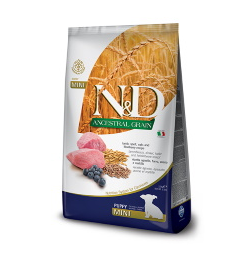 Ingredients: lamb, dehydrated lamb, whole spelt, whole oats, dried whole eggs, herring, dehydrated herring, chicken fat, herring oil, dried beet pulp, dried carrot, suncured alfalfa meal, inulin, fructooligosaccharide, yeast extract, dried blueberry, dried apple, dried pomegranate, dried sweet orange, dried spinach, psyllium seed husk, salt, brewers dried yeast, turmeric, glucosamine hydrochloride, chondroitin sulfate, vitamin A supplement, vitamin D3 supplement, vitamin E supplement, ascorbic acid, niacin, calcium pantothenate, riboflavin, pyridoxine hydrochloride, thiamine mononitrate, biotin, folic acid, vitamin B12 supplement, choline chloride, beta-carotene, zinc methionine hydroxy analogue chelate, manganese methionine hydroxy analogue chelate, ferrous glycine, copper methionine hydroxy analogue chelate, selenium yeast, DL-Methionine, taurine, L-Carnitine, aloe vera gel concentrate, green tea extract, rosemary extract, mixed tocopherols (a preservative). Positives:Mineral listings do read to be chelated or proteinated (better mineral absorption); contains alfalfa which is a health promoting ingredient; contains several animal protein sources -- lamb, egg, herring. Negatives: No probiotics; contains DL-Methionine, a synthetic amino acid Let's compare 2 popular treats (it's food, too! You need to examine everything your pet eats). We'll start with Biljac Gooberlicious:  Ingredients Chicken Liver, Chicken, Chicken Meal, Wheat Flour, Glycerin, Phosphoric Acid, Salt, Potassium Sorbate and Citric Acid and Mixed Tocopherols and Calcium Propionate and BHA (preservatives), Titanium Dioxide Color, Natural Peanut Butter Flavor, Rosemary Extract. What's bad and a risk? Contains BHA. Contains dyes. Food dyes provide no benefit and sometimes come with risks. Also, we try to avoid a lot of wheat with our pugs as it can be an allergen. Let's compare this with a higher-end treat (and much more expensive) Origen Free Run Duck Treat  Ingredients: Duck, duck liver, mixed tocopherols (natural preservative). Company states its foods are sourced from federally licensed facilities. "Meat and poultry ingredients must be sourced from animals that are not condemned, diseased, or that have died otherwise than by slaughter." Documents received by TruthaboutPetFood.com through Freedom of Information Act request evidences ingredients in US plant are feed grade. Ingredients are primarily locally sourced, but may be sourced elsewhere to meet supply needs. Vitamins and minerals are processed in the US and globally sourced - company admitted to sourcing some B vitamins (B1, B6, B9) from China. They state the vitamins are human grade/quality. Company cannot guarantee foods are GMO-free. Now let's look at our favorite treat that we feed our pugs (if we aren't baking chicken, lamb, or steak etc.): Chicken, Apples & Kale pawTreats by pawTree: 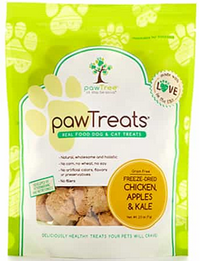 Ingredients: Chicken, Apples, Kale Positives? Made in USA. No preservatives. All natural. Super fresh and delicious. All of our pugs love every variety of the pawTreats. Negatives? none. No risks. Here is one of our pugs, Lilibeth (CH Pickwick's Show the World How to Smile), trying this treat for the first time. She's the most finicky pugs we've ever owner in over 30+ years and our official taste tester. If this picky eater likes it, then it's a winner and these are the first healthy treats she has ever loved. In this video, Lilibeth compares Pup-peroni with the Turkey, Apples, and Cinnamon pawTreats: Before we leave, let's address one more point when evaluating food -- especially now during this possible challenging time if indeed there is a correlation between Purina and other major dog food brands and dogs getting sick. If your dog doesn't like the food for some reason (even if it's a food he/she has eaten for a period of time and used to like), trust your dog. They have an amazing sense of smell. Unless it's Charlie (our other pug who will eat anything ... without ever tasting ... he holds the fastest time for the famous pie eating contest), there might be a reason your pet is leary of a particular food .... mold? contamination? they will smell this (many of them ... not Charlie ha). So don't try to doctor it up and force it down them.
As you read the ingredient lists on the back of the food bags you will learn more and more about which brands will help your furbabies thrive and which will cause potential issues. Research, watch out for recalls, and observe your pets carefully. At Pickwick pugs we love pawTree because of the variety of foods so we can rotate proteins which some studies suggests helps prevent allergies (protein allergies). We have one pug who is allergic to egg so this limits us with some foods (such as the Farmina N&D). Another reason we love pawTree is because it has never had any recalls. Plus they offer a 100% money back guarantee -- what company does this in this day and age? They stand behind their product. Several months ago Purina mailed us a FREE bag of food because of one of our pugs winning at a dog show. Of course, being musicians, we love free anything however, I ended up not feeding this to our dogs because I didn't like the ingredients. It's a good thing perhaps, given these new developments being reported, that I trusted my gut. A few last tips: Research the companies -- are they being bought out by other large manufacturers? Are their products made in the US or China or other country? Check with holistic vet sites. Since their philosophy is based on being proactive versus reactive, food is an important component to health. They stay on top of the latest findings and encourage only the very best foods. Not every brand of food is right for every dog. By rotating and incorporating real food with dry dog food or freeze-dried dog food, you will have a greater chance at finding the right balance of nutrients. We add real food to the quality kibble or freeze-dried pet food. We add things things like plain probiotic yogurt, pumpkin, blueberries, apples, carrots, bone broth we have made ourselves, and supplements like fish oil, probiotics, and Nuvet daily vitamin. We bake chicken and lamb and beef for treats. Real food. We also feed Ross Wells Blue Titan raw dog food (another company that has never been involved in any major recalls or controversies -- since its origins in the 1950s!). This is what we have found to be successful. It's our theory at least and it seems to be working with our pugs, thankfully! In the end, the best dog food for your pet is one that meets their individual nutritional needs and is something they enjoy eating. Always consult with a veterinarian if you have concerns about your pet’s diet or health. Let’s talk about harnesses. 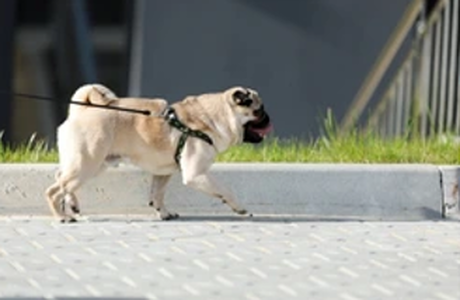 Harnesses are not a bad thing. In fact, they are a great option for pugs .... eventually. The problem is when owners put a harness on a puppy for walks before the puppy has been thoroughly trained to walk on loose-leash. Going for a walk with your pug puppy wearing a harness after s/he has mastered loose-leash-walking is fine and a good option to prevent him/her from accidentally slipping out of collar and escaping. Going for a walk with your pug puppy wearing a harness before s/he has mastered loose-leash-walking is (in my personal experience of training pugs for 30 years, plus numerous years as a professional dog walker with all sorts of breeds) going to make it more challenging to train loose-leash-walking. (FYI: We never walk our show pugs on a harness (even after they are trained to walk on loose leash) because it affects their gait and movement. We do use a harness when hiking and more on that later.) A harness is designed in a way that it makes it more comfortable to pull and in some cases can increase drive or frustration if you use it to hold the dog back (people who do bite sports actually use a harness and tie back to build drive) so yes, it can quickly make pulling worse. A collar is at least mildly aversive in comparison. 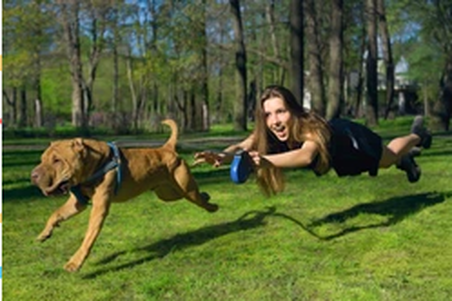 New pug or pug puppy owners should try to avoid this scenario at all costs (unless they want a pug who will always pull on the leash while out for walks .... for your and your pug's entire life): 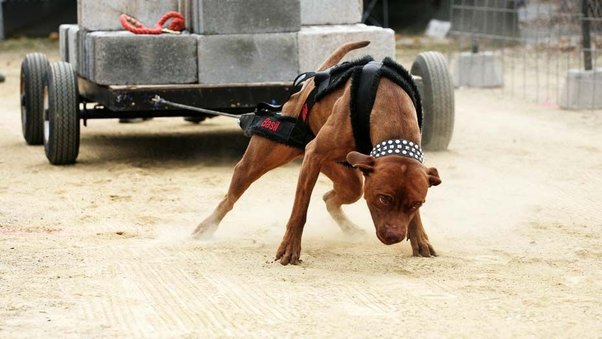
Obviously, no pug puppy owner -- and no pug -- wants the above scenario, so let's discuss another option. Don't "go for walks" until your puppy is trained to walk on a loose-leash. Training to learn to go-on-a-walk is different than going-on-a-walk. And, when training, use a flat collar and leash not a harness. Work on mastering loose-leash-walking every.single.day. I won't lie, training loose leash walking is one of the more difficult skills you'll teach your pug puppy, and it will require consistency (you will always always always need to maintain a loose leash when training.) But it can be fun! And mastering loose-leash walking makes life with your pug puppy so much more enjoyable. In a minute, we'll talk about the difference between a training-session-structured-walk (practice walks) which you'll be doing for the first few months vs your typical, casual walk (your ultimate goal) outside. So, what is loose-leash-walking? When you maintain a "J" in the leash, with slack while walking. 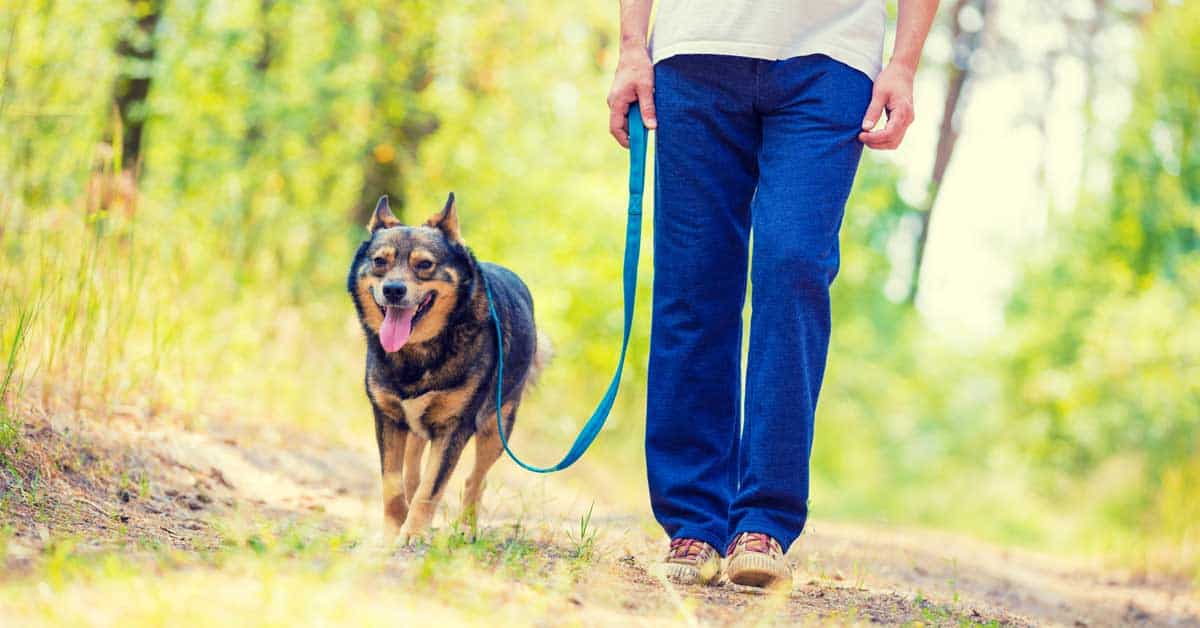 Your pug might walk a little ahead of you (as long as the leash is slack) or beside you in an unstructured, loose heel. Most folks don't mind letting their pug walk a little in front of them as long as there is no tension on the leash. 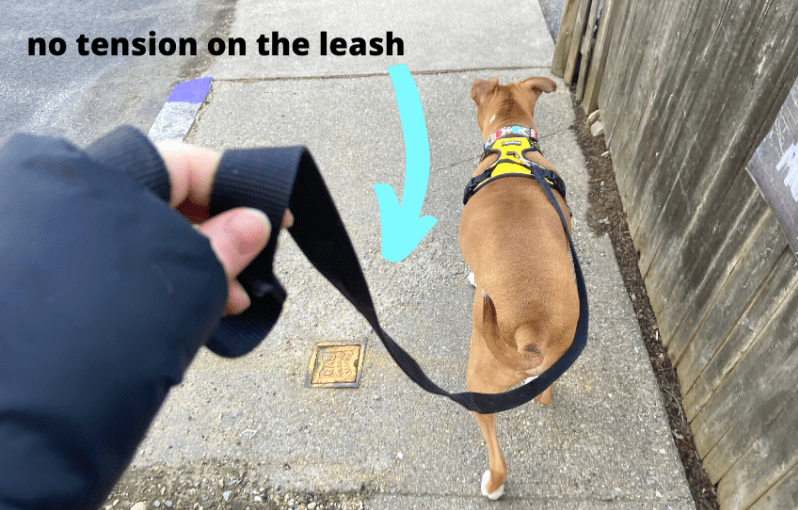 Here is a video of one of the dogs I used to walk with Wag on a regular basis. In the beginning he would never "check in" and it was as if he didn't even realize there was a human attached to the end of the leash. Needless to say, there was never a "J" in the lead when we first started. But after lots of walks where we constantly engaged -- I spoke with him cheerfully, sometimes delivered treats, and changed directions a lot to "keep him guessing" -- the end result was such a satisfying walk. While there's no sound to this video you'll notice him "check in" with the eye contact he offers, and sometimes he gets a tiny bit ahead but never enough to pull. (If he did, I would have gotten his attention verbally and then lured him to change directions .... like a dance partner cuing before a turn). Some owners would prefer for their pug to stay within a foot or 2 of the human's left leg during the walk, unless given a release command to go sniff and explore, but it's really up to you how you'd like to define it and what you're most comfortable with. Your criterion might vary depending upon the situation and environment. Here is a young 10-week old Pickwick pug puppy who took to heel with automatic sits quite naturally. This is not something we would normally require but Gus must have been a heel work champion in his former life lolz! Loose leash walking is much more informal and relaxed versus a heel where the dog is intensely focused on the handler at all times, essentially attached to the handlers left leg with imaginary velcro. 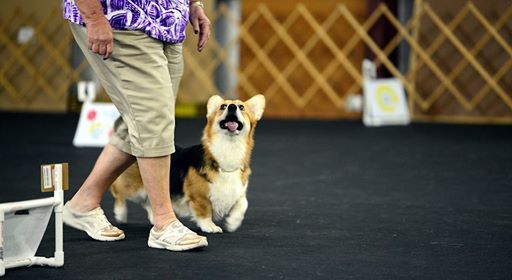 But again, my opinion, (and some may disagree), that after training over 100's of puppies and dogs ranging from pugs to all sorts of breeds as a Wag-Walker for many years, I can truly say that training loose-leash-walking while the dog wears a harness is challenging and makes progress slower. It is much easier and more successful, (I'll venture to say "possible") to train using a flat collar and leash. 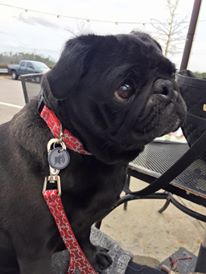 A 6 foot leash is best. NOT A RETRACTABLE LEASH. Do not use a retractable leash. They are dangerous ... people lose fingers and dogs can die. 
But, I digress. Back to harnesses. Why should you use a flat collar and regular leash for training? Why? All dogs have “opposition reflex” which means they pull against pressure. When a dog feels pressure on the front of his throat from his collar, he actually pulls against it. This is why choke collars only make the problem worse. The tighter the collar gets, the more s/he will pull. This is also why retractable leashes are bad (in addition to the horrific injuries they cause), because the dog is constantly experiencing opposition reflex. With a harness, the dog has all sorts of contact places where he feels the opposition reflex, not just his neck. 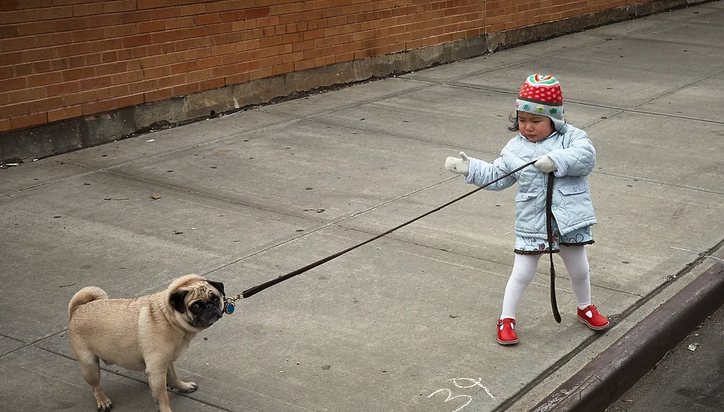 For safety issues, (so, for example, your pug doesn't escape and slip out of its collar), if you want your pug to wear a harness in public before s/he is completely trained to walk on loose leash, then you will need to plan to AVOID GOING-FOR-A-WALK while wearing a harness and, instead, you will need to pick up your pug and carry her. Set her down to potty or sniff something, but them PICK HER UP again and carry while walking. Practice Walks vs Casual Walks So now is a good time to talk about the difference between a "training-session-walk" and a "let's-go-for-a-walk." A structured, training-session-practice walk is what you'll be doing for the first months. Daily if possible! These walks will require a LOT of thinking on the dog's part and FULL ATTENTION from the owner/handler. (Your pug will be mentally exhausted afterwards). How does a structured-training-session-walk differ from a normal casual walk?
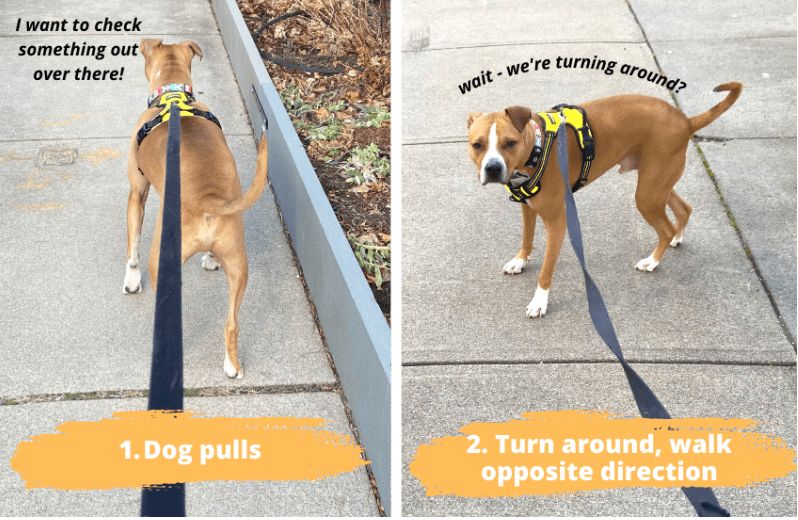 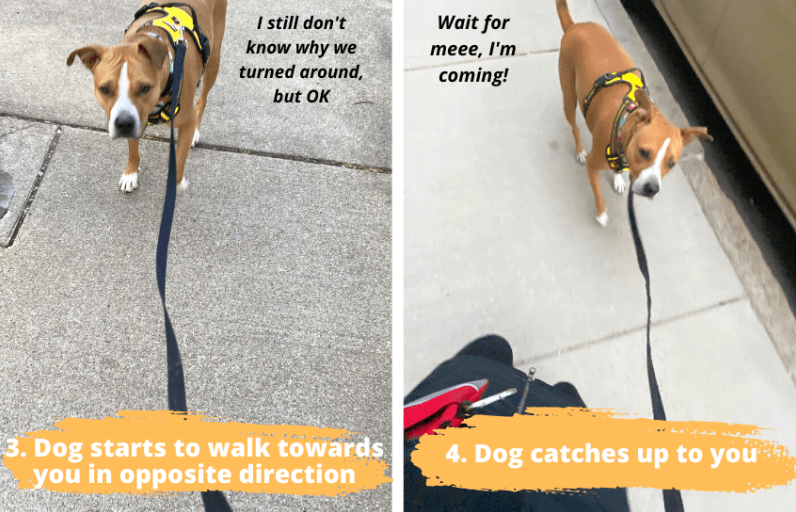  Most common mistake = advancing too fast. Think of loose-leash-walking training as a subject in school such as mathematics. Your pug puppy will be enrolling in many different classes as s/he advances:
If your pug was enrolled in Arithmetic, you would not expect the teacher to start throwing out calculus equations. Similarly, if your pug is enrolled in the introductory class for loose-leash-walking, you would not expect her to walk successfully in a crowd at Mardis Gras. That would be saved for Calculus level. As your pug progresses from level to level, you will need to resort to picking up/carrying (or putting in a stroller) if a particular environment is too challenging for him/her given level. For example, a young puppy enrolled in “arithmetic” should never be expected to walk on loose leash in a dog park with dogs running around everywhere. There is absolutely NO way the human will be more interesting than those fun dogs running wild everywhere! Eventually, ONCE YOUR PUG IS THOROUGHLY TRAINED TO WALK ON A LOOSE LEASH, then you can walk successfully using a harness. We use a harness that has a ‘handle’ on the top for our hiking pugs so that we could grab them quickly if they slipped into a stream or something. However, we don’t go hiking until our pugs are solid on recalls (“come when called”) and loose leash walking. 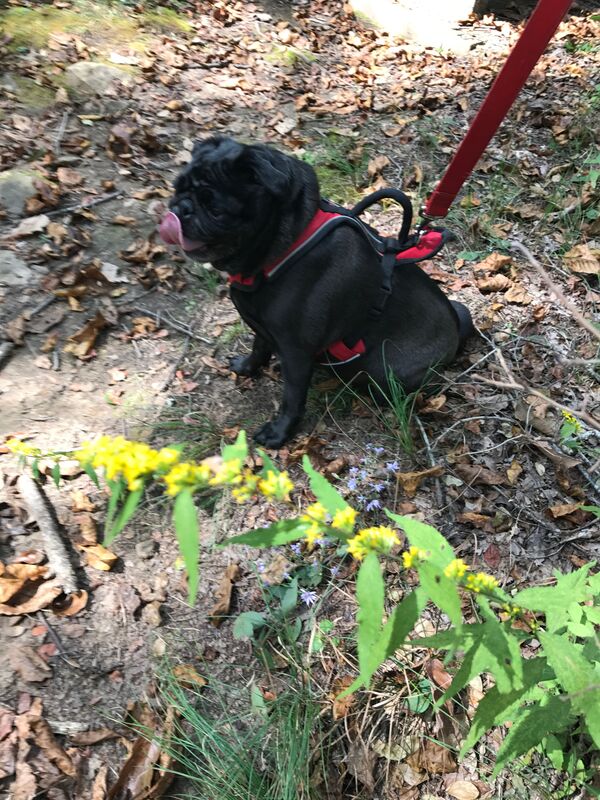 To be clear: Harnesses are not a bad thing for pugs, (unless you have a conformation show pug – and walking a lot in harnesses ruins fluid, proper movement), but just not recommended while training loose-leash-walking. 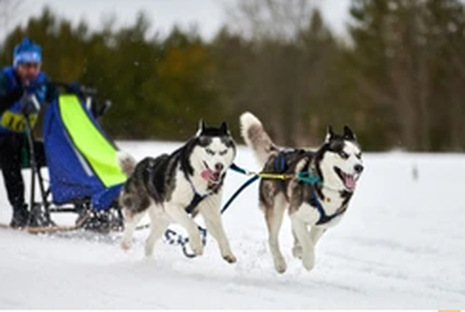 A good harness allows a dog to pull with all his strength without feeling any discomfort or strain. This is very important in weight pulling sports, or pulling a cart or dog sled. They may also be used on very small dogs or dogs who have a structural problem with their trachea who have not been (and most likely never will be) trained to walk on loose leash. But of course if you use a harness instead of a leash on a large dog who hasn’t been taught not to lean on the leash, it will cause you to lose control of the dog. Again, a harness allows the dog to use his entire strength to pull you. If you don’t want to make a wrestling match out of every walk, you would want to control just the head. If you control the head, you control the dog. This is why horses are walked in head halters and ridden in a bridle. Control the head and you control the horse. To prevent your pug from pulling on the leash you need to understand several important things. First, your pug pulls because she thinks she’ll get ahead of you faster by pulling. Secondly, she needs to understand that you are a team and should walk together – if she’s not interested in you, not “checking in” and focusing on you, then she’s going to do her own thing. Why is your pug not checking in? Is it because you are not really interested in walking with your pug? Is it because you jerked the lead when she wanted to stop and sniff an interesting smell? Is it because you’re focused on your cellphone or listening to music instead of interacting with your pug? Or, most likely, is it because you don’t work on loose leash walking enough? The innate “programming” of a dog is to walk for very long distances alongside other dogs – “her people”. Just as you would do if walking with another human versus a solo walk, you need to hold up your end as your pug’s owner and engage with her during the walk – talk to her, wait when she stops to sniff a flower or another dog, be present and aware of your walking companion at all times. Point things out that you notice and if she pulls, just stop walking and don’t move forward again until she gives you attention (looks you in the eyes). This tells your pug that you are not going to walk while she pulls. Next time she pulls? Stop again. And again. Eventually your pug will get the point. Change up your speed. When you slow down, your pug will need to walk at the same speed etc. We love to practice heel (or loose leash walking) to this music ... the treat delivery is randomized ... If the pug is pulling constantly it will indeed possibly damage the trachea so, if an owner is not willing to put the necessary time in to train loose leash walking, then slapping on a harness from the start is the humane thing to do. But again, (in my opinion), the owner will need to realize that by doing this he/she is committing to a lifetime of pulling. While on the subject, the 'no pull harness' is a joke. A dog pulls for 2 reasons 1) she thinks she'll get ahead fast if she pulls you along 2) she doesn't realize that you both are a team -- walking together (or, more bluntly, she is simply not interested in her human). The answer is definitely not to use aids, (especially punitive aids like choke collars), but to change how the 2 walking partners are walking together.
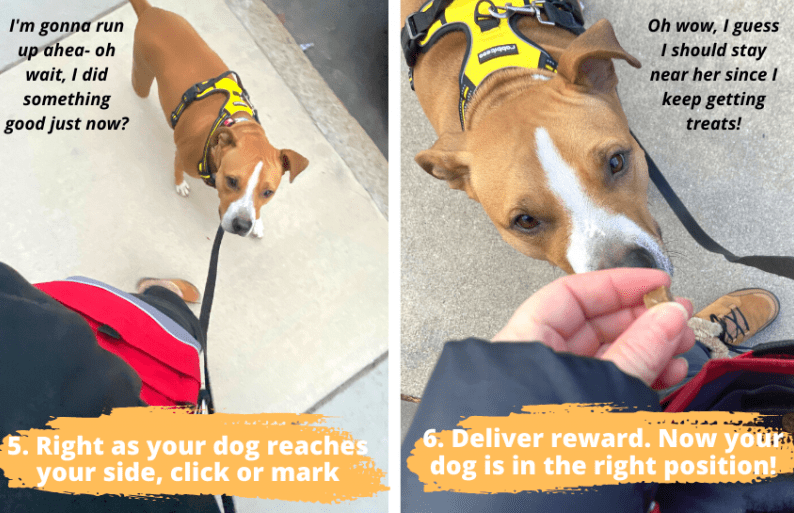
You want your pug to "check-in" a LOT. Reward your pug every time s/he chooses to look up and focus on you. When I say "watch me", my pug knows s/he needs to look up at me ... and then s/he will get a treat! Deliver the treat just to the left side of your left leg, around your knee or a bit lower, so that your pug is in the place you ideally want. (FYI you always want your pug to be in the position he is receiving a treat for ... i.e. if treating for a sit, your pug should be sitting when he gets his treat). ' Tip to save your back: With toy breeds (i.e. pugs) I carry a target stick, or dowel, or long wooden spoons with a potato chip lid or tupperware lid taped to the end. I load the lid up with peanut butter or a chicken/cheese spread I make that has the consistency of peanut butter (so that it sticks to the lid). Here is a puppy working on loose leash walking at Home Depot ... normally the target stick is not right in front of the face constantly (like a lure) but just used to occasionally deliver a treat. How to teach loose-leash-walking:
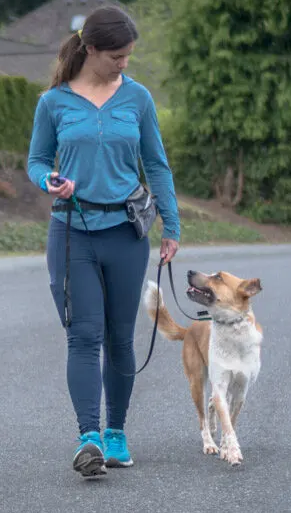
IMPORTANT! Don't allow your puppy to jump up at your hand OR step in front of you. Remember, you always want to deliver the treat when your puppy is in the position you ideally want. (If loose leash walking, at your left side with puppy facing forward; if teaching "sit" the puppy should be sitting when you deliver the treat etc. If you deliver the treat to your puppy when s/he steps in front of you s/he will learn that you want him to be in front of you and you'll end up with a pug who constantly trips you. Take lots of breaks! This is a tough skill to teach ... for the puppy's concentration and for the human's body (it's back breaking if you are always bending down to deliver the treats). Puppy's have a tough time with self-control. They want to sniff and explore the environment yet we are asking the puppy not to do this very natural behavior. Set your puppy up for success – keep it simple and easy for him (stay in arithmetic until ready to advance and don’t skip to calculus after one training session). You might think this pug is at the calculus level ... But he still had a long way to go for proofing this sort of focus and concentration in crowded, busy streets, or with lots of distractions at a dog park etc. This pug was perhaps trigonometry level at best. Finally, observe the cardinal rule: Always, always, always. (Always require your puppy to maintain a “J” in the leash). Never, never, never. (Never allow your puppy to pull as you are walking -- if you allow this too much, it will undo all of your previous efforts in training. If you want to skip from arithmetic directly to calculus, and skip those first few months of practice-walks, then expect to see this look on all of your walks for the next 13+ years . . . . 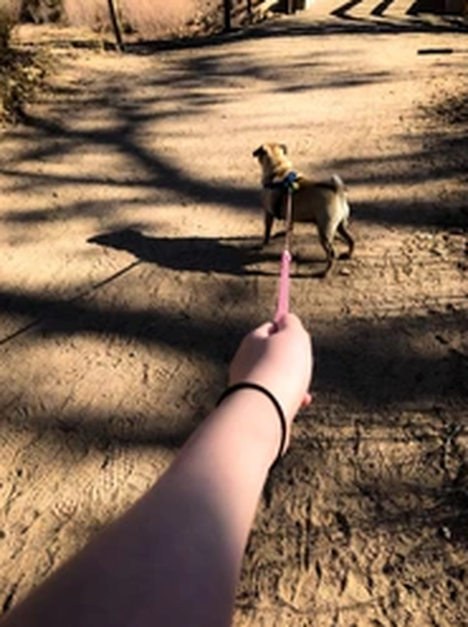 Or, this look .... because you finally get so exasperated you just leave your pug at home all the time.  So don't despair and don't give up. Work a little bit on loose leash walking every day as you build a better relationship with your pug. Keep your eye on the prize .... walking down main street or through the Farmer's Market being able to window shop or look around without worrying about tripping on your pug. Keep your training sessions short. Stay positive and remember .... one day, your diligence will pay off! Your pug puppy will enter adolescence and it will vary when and for how long. It might be around 6 months of age, but you'll definitely know your puppy is a teenager or "preteen" when you start to notice things like:
If you see a major behavior change in your pug puppy between approximately 6-12 months of age, first rule out pain or injury or an emotional scar (something happen at boarding? with a neighbor or houseguest?) If none of the above, then it's most likely your puppy is starting to navigate the "terrible teens." Sometimes pups enter this stage seemingly overnight and it almost always comes unexpectedly. The truth of the matter is, your puppy won't just seamlessly morph from a puppy into an adult .... There's a reason "adolescence" is not always a word most folks like to hear and it can be a challenging time for both the owner AND the puppy. So, this article is to address some things owners can do to be able to more successfully their pug puppy's teenage phase without the relationship becoming tainted, or everyone's sanity! If you ask any animal shelter, you'll learn that the most common age for dogs to be surrendered is between 6-18 months of age. This is because canine adolescence is a tricky time if you're not prepared but, with a little preparation, patience it will pass quickly and be some of your best memories of your pug puppy once s/he is an old senior and you are reminiscing. One of our favorite memories is when our pug Sebastian (who would sit off leash on the glider with us while we drank our morning coffee on our front porch) suddenly decided to sprint up our STEEP driveway to join a marathon! Yep, there were a bunch of runners with number signs etc. running down our street! He sprinted up the driveway with Jeff running behind in his slippers and robe ... unable to catchup ... and then joined the marathon! I'll never forget this image of all these runners, and a little black pug. In the next neighborhood several blocks away, exhausted, and still wearing his robe and slippers, Jeff finally sat down to catch his breath. He kept asking runners if they had seen a black pug and finally one woman responded, "yes! he ran alongside me for awhile but he stopped awhile back" and pointed in the direction she last saw him. Needless to say, Jeff finally got him and we learned that Sebastian was no longer the young puppy who would stick beside us off leash no matter what ..... he was ready for adventures and to move onto the next chapter in his life! Always something. Other owners have noted that their pug puppy will suddenly start chewing on furniture when it had never done that before. Any behavior out of the unusual is your pug trying to tell you something. How long will my pug stay a teenager? It will vary but a small toy breed tends to mature around 1 year of age. "During this period there are several developmental processes at work. Being aware of what they are and the effect they are likely to have on your puppy's behavior will mean you can be prepared to deal with them. This in turn will shorten the time they will have an impact on both your lives." Just as with human teenagers, your puppy is becoming more independent and starting to look at the world as adults rather than as an infant. Thus relying less on their human for security and more likely to "to go self-employed as they begin to form their own opinions and behaviors regarding the world around them." Just remember = This is a NATURAL PROGRESSION and part of a dog's inherited survival instinct.  TEETHING: Is your pug puppy teething? As if all of this wasn't enough, with your pug puppy's full set of adult teeth around 6 months of age, the teeth will be needing to 'set' properly in the gums. To do this your puppy is really going to need to be able to chew. Unfortunately, many owners don't understand this and think their teenage pug puppy is just being destructive when they actually have a PHYSICAL NEED to have appropriate things on which to gnaw. Chew toys to the rescue! 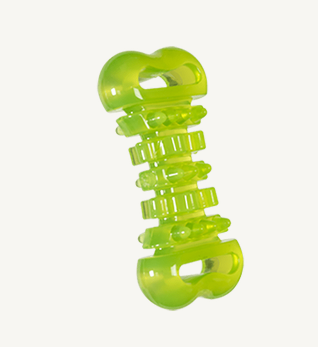 Most owners might think that their Shark puppy is a thing of the past, so they may not be providing enough chew toys like this "Treaster" or kongs. We love Treasters becuase they are durable yet fun for the pugs to chew and we can stick a treat or even their food into the nooks and crannies. You can add peanut butter, pumpkin, kibble, and even add something like yogurt and then freeze. It's a wonderful texture that they love -- the rubber is pliable and soft. It's tempting to think "I don't want to spend money on those puppy chews anymore" but, a little peanut butter and appropriate chew toy they like is MUCH cheaper than your furniture and shoes! puppy teething guide. Why is my teenage puppy suddenly scared? Dogs also have a second fear period that happens somewhere between 6-18 months of age. Sometimes this just happens once but in other dogs it can happen several times which may coincide with growth spurts or hormone surges. You might notice your pug puppy becoming reactive or scared of things that never bothered them in the past (other people, dogs, strange objects, places etc.). Single-event learning is most likely to occur during this teenage phase so HOW you manage this period is vitally important. A bad experience at this time can have a lasting effect on your pug's behavior for life .... EVEN IF all of their previous interactions have been positive. Their ability to make a split second decision on what is 'safe' and what is 'dangerous' is being developed so that they can survive as an adult ..... and they'll remember this for life.  Why is my adolescent dog behaving differently?
Teenager pugs are dealing with hormone surges and this can increase excitability, intensity and over-reactions to just about everything. Shy dogs can become shyer and confident dogs can become more (sometimes over) confident. If your pug puppy did not receive enough socialization before it was 16 weeks of age (or a bit older) you will start to notice this now with more problems with fear -- reactivity and perceived aggression. "Well, I'll just neuter him/spay her and we won't have any more problems." Honestly, this is not a cure for behavior problems and sometimes it can exacerbate others. Spay/neuter at the correct time for HEALTH reasons (we believe only after they have matured more, which is closer to a year, but definitely NEVER BEFORE at least once cycle or the equivalent with a male). Instead, the important thing to do is STAY CALM. Don't Punish your dog in ANY way as this will just damage your relationship and make your pug even less likely to want to work with you. (Would you rather train an enthusiastic pug puppy who is engaged and focused on you or a zombie pug?) Go back to the basics with your training cues -- teach every single exercise again FROM THE BEGINNING. And don't forget positive reinforcement with LOTS of encouragement and treats. Instead, go back to the very basics with your training cues – and teach every exercise again from the beginning. Don’t forget to include lots of rewards as teenagers need plenty of encouragement and positive reinforcement (even more so than puppies). For example, let's say your pug puppy just stopped coming when called. They just forgot? Nope. So, make it into a game. Get a long line and, away from other dogs/people in a quiet time of the day, work on recalls again. Have them chase you, and just remember what it was like when you worked with them as a tiny puppy. Remember, the goal is to always set your pug up for success and not failure. Why? Avoiding stress and training failures means your pug will have more capacity both mentally and emotionally and be able to cope with day-to-day teenage challenges. They will avoid that negative experience that might shape the way they look at the world. During this time, your pug is re-evaluating everything and everyone in their life. She/he is starting to look at the world with the eyes of an adult rather than a puppy. Bad experiences now can go on to shape how they view the world and how they behave in the future. It might seem like a step back in your training but, you'll find that your pug will come out on the other side of adolescence well-behaved and with both training skills AND your relationship intact. STAY ON TOP OF SOCIAL SKILLS. If you pug has another canine friend, get together, go on walks together, schedule some play time. (Make sure they don't play too rough -- ) ENROLL IN ANOTHER TRAINING CLASS or activity. An organized activity helps the teenage brain (and you). Scent work classes are AMAZING. Look for things that will use the puppy's brain and problem-solving skills, earn rewards but not strain their still growing bodies. Scent work Avoid stress. Don't over-exercise. Conversely, you'll want to keep your teenage puppy calm and stress free and perhaps let physical exercise take a back seat for the time being. Many owners think "more exercise will tire them out" but this is just a fallacy. It might make them fitter, but then they'll need MORE physical exercise to become exhausted. An exhausted pug does not deal with stress well, nor learn well. Enrichment dog games, toys, indoor training, hide-and-seek, scent work and other things that USE THE BRAIN tires your pug out. Teach some new tricks (or proof and improve duration or elegance of a current skill or trick.) Scatter feed. Stuff a rubber toy inside a cardboard tube they can rip/tear. etc. Some pug puppies sail right through as teen angels while others are hooligans. One is not better or worse than the other -- just how God made them. They are just doing the best they can with their own individual personality and trying to find ways to deal with this development stage. Some sail through adolescence as teen angels – while others are definite hooligans. Neither is ‘good’ or ‘bad’, they are just doing the best they can and all have their own individual personalities and ways of dealing with this unavoidably developmental period. Remember, do not think they are being difficult, tell them off or punish them for the unusual behaviors, otherwise you will exacerbate their fear. Don't force your pug to ‘face their fears’ but instead keep a comfortable distance where they do not feel they have to react or be worried, let them approach, retreat and explore in their own time, and reward them with treats to keep all interactions positive. Avoid negative encounters or potentially worrying situations as far as is possible in this time as a bad experience now could color the way your puppy looks at the world and affect his behavior as an adult. When you socialize, make sure it is always a positive experience. Encounters need to be positive and fun.
TEAMWORK is the key. Don't give into thinking that your teen puppy is intentionally trying your patience. remember that this is a complex developmental time for your dog. As a piano teacher, I've always found it challenging when my longtime students I've taught since age 4, 5, or 6 enter the terrible teens. Very often that would be when they would discontinue their piano studies so I am always picking the brains of Jr High school teachers. They are all pretty cool, down-to-earth, and genuine, and many of them mention that their secret is to laugh it off. They use sarcasm and other things that make all the "big stuff" seem smaller and more manageable. Also, don't forget to look at how cute these guys are at this awkward age! That pug puppy's adorable cuteness will give you the motivation to make it through these few months (or days or weeks).
Amy attended, along with Mr. Drysdale, Emma, and Eliza, the Pug Dog Club of America National Specialty in Virginia Beach October 1-8, 2023. It truly was a magical week filled with health seminars, conformation shows, agility and obedience trials, health screening, and amazing PUGS from around the US and Canada. We learned SO much. Mr. Drysdale received a "0" on his BOAS health screening (which is the best score possible ... no indication of any breathing issues such as elongated soft palate). Lecture notes from the health seminars are available on this webpage.
Here's a video with some hi-lites of the week . . .
And another video compilation from earlier in the week . . .
On Friday evening, I got to visit with Scarlett who now lives with a wonderful family in Virginia Beach. Scarlett joined them last April when she was just over a year of age. When I entered the house Scarlett ran up to me and put her paws on my shoulder to "claim me" and stared into my eyes, then licked my face with kisses. She is SO happy and absolutely LOVES her "sister" Lila. Lila is 9 years old, but still full of life and Scarlett is so loving and kind to her. When Lila has an inverted sneeze attack, Scarlett gently licks her face to comfort her. Here are some photos of Scarlett in her beautiful home with her human 'sister'. In this video of Scarlett with her owner, it's pretty obvious she has a marvelous life with a loving family. https://www.facebook.com/544684001/videos/351712620630536/
Eliza won Best of Opposite Sex in a HUGE lineup of puppies in the 4-6 class. This was truly an honor because there were so amAZing puppies in that ring. Here is her win photo . . .
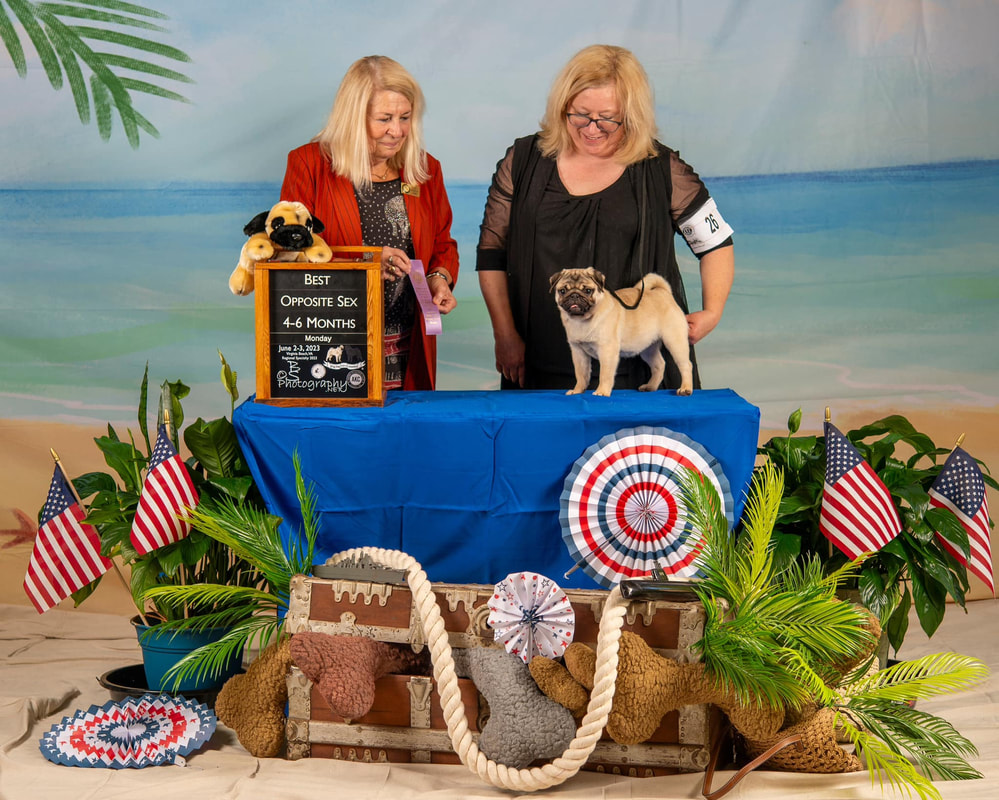
And Mr. Drysdale also won a ribbon in his Bred by Exhibitor 6-12 month class. Here they are showing off their hard-earned ribbons.
In addition to the BOAS testing, Mr. Drysdale also completed an eye examination by the visiting veterinary ophthalmologist.
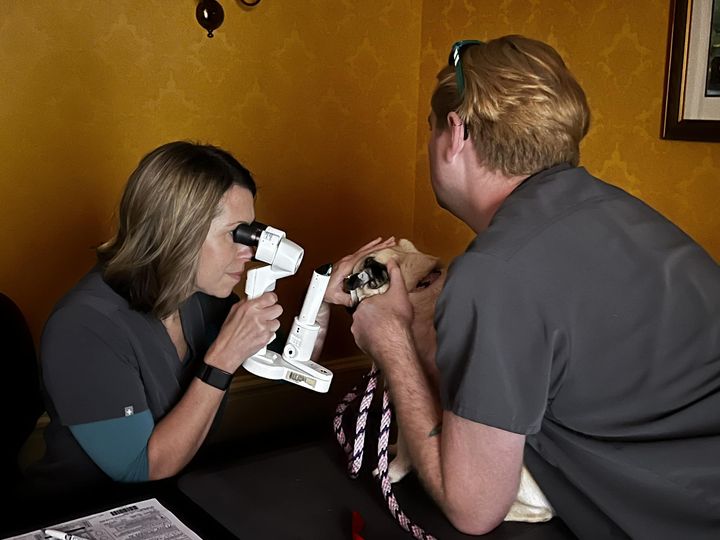
Emma also competed on Friday in the 2nd 4-6 BPUP and was amazing for her first time in the ring, but the judge preferred another pup this day. To get an understanding of HOW many pugs were in just the 4-6 class, here's a video with some hi-lites. You can also see Mr. Drysdale NAIL his stack on the table which was huge because, just a week earlier in Knoxville, he had a bad experience on the table and wouldn't stand. We are SO proud of Mr. Drysdale and his complete turn around! Thank you to the judge, Joe C. Walton for making it a positive experience for my pugs. These thoughtful pugs like Mr. Drysdale are much more in tune with the judges and react accordingly. If the judge is hesitant or angry, they sense it. Mr. Walton always had a pleasant look for the dogs ... and how he did this when seeing so many 100s of pugs (yes over 300!!) over several days, well that's amazing.
Eliza, Emma, and Mr. Drysdale participated in the PDE study. They showed no signs of PDE in the examination but they will be a part of the study in helping with statistics in comparison with other pugs who suffer from this horrible disease. The trial is paid for by a wonderful nonprofit, Ethos Discovery, and led by Dr. Rebecca Windsor. With every exam they complete, they are able to learn more about the rate of occurrence of this devastating disease. Additionally, the opportunity to test for the early form of PDE, with the screening exam we participated in, allows them to identify and treat dogs with this early form of the disease in hopes of preventing them from developing the severe and fatal symptoms of PDE. To learn more about this trial, you can visit their website. Ethos PDE trial. To learn more about Ethos Discovery, a 501(c)3 nonprofit incubator of scientific innovation (who covers ALL costs associated with this clinical trial ... which involves stem cell therapy and $25,000 + per pugs with PDE being treated), and their mission to "improve health outcomes for humans and animals with complex medical problems", you can visit ethosdiscovery.org.
Eliza had some fun training with an incredible pug owner/handler/trainer during a break in the show. It's fun watching people who know what they're doing work their magic. Dogs see right through it, too, and respond appropriately ... if their humans know what they're doing and are genuine, the pug is right there engaged in the game.
Of course the pups enjoyed the hotel room and, after a few days, Mr. Drysdale FINALLY mustered up the courage to walk onto the elevator. He was a pro by the time we left ;)
We recently added "Risa's Revisions" to our application process for prospective buyers. The process was thorough before but, with a few additions, it will help make the transition for both the puppy and the puppy's new owner smoother, more successful, and rewarding. It will help the pug and the pug's owner(s) thrive -- not just survive -- for the pug's entire life and prevent many surprises and frustrations. 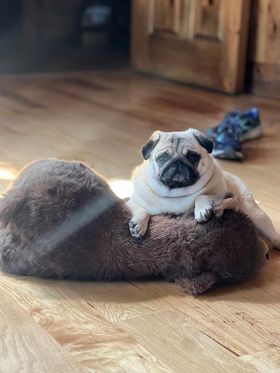 If you're interested, you can see the entire application process on this webpage, as well as learn about Risa and her horrible experiences during the first year of her life. One of Risa's "revisions" involves some required reading for prospective owners. One of these amazing books, "Raising the Worst Dog Ever: A Survival Guide, Memoir and Dog Training Manual" by Dale Ward, should be in any dog owner's library and the new owners need to absorb the invaluable information prior to bringing the puppy home. Stocking up on these refresher courses in advance allows the new owners to focus all of their attention and devote all of their time to the puppy, avoid mistakes and frustrations from the start, and not waste valuable puppy play time scouring through books. The entire book is amazing, and even gives great advice on equipment to gather prior to bringing a puppy home, but a particularly helpful chapter addresses reading a dog's body language. Canine Body Language On page 124 of Dale Ward's award-winning book, "Raising the Worst Dog Ever: A Survival Guide, Memoir and Dog Training Manual", she addresses Canine Body Language. (If you don't own this book, here is the link to add it to your permanent library.) Ward summarizes what you should be looking for in your dog's demeanor that will let you know that they are fearful, anxious, or stressed. Ward explains, "Why is this important? Dogs, if pushed beyond what they can handle, may resort to biting to make the scary thing go away. You really want to avoid pushing your dog, or any dog for that matter, beyond what they can handle. You can think of this as going past the tipping point, or in dog training jargon, going over "threshold." Think of it as a glass of water. Each stress event, no matter how small, adds water to the glass. Eventually, too many stressful events will make that glass overflow. So the tipping point is not some abstract point in time, it's the culmination of stress that finally makes your dog go over threshold. The term "threshold," according to the Merriam-Webster dictionary, is defined as "the point at which a physiological or psychological effect begins to be produced." When your dog is anxious about a specific situation or the presence of a certain person, there is a point at which they may tip over into the fearful zone. They may go "over threshold." We always want to try to help our dogs cope before things go that far. If you know what to look for, you can mitigate the situation and help get your dog through it." In an article by Jane Messineo Lindquist, the creator of Puppy Culture, and author of another incredible book, "When Pigs Fly", she explains the importance of avoiding stacking stressors with young puppies. "It's important to allow the puppy to come back to emotional baseline before doing another big emotional experience. As a rule of thumb, we allow 24 hours in between really challenging socialization experiences for puppies under 10 weeks of age." Lindquist recommends this video by Donna Hill as explaining why we should avoid stacking stressors. Lindquist continues, "Our puppies normally don't need that much recovery time as they approach 12-14 weeks of age, but we do get them out a lot and our breed (bull terrier) is very adaptable and resilient breed. The only thing you really need to know is, if you see an emotional fallout reaction at ANY age, give your puppy or dog at least 24 hours to come back to baseline." On the website Fear Free Happy Homes for Pets, they explain that "Animals speak all the time, as spoken through their body language, but many times their messages are misunderstood or go unheard. As a result, a dog may be placed in a situation or interaction where they're comfortable, but if polite requests for help or requests for space go unheard, their body language and behavior may escalate to a louder shout (think: lunge or growl) to get others to listen. Attending to the early signs of fear, anxiety, and stress, as well as understanding the signs of a content and happy pet, is essential for deepened relationships, safer living with dogs, and helping dogs live happier, healthier, fuller lives. In this video, you'll learn the key communication signs to attend to for better, safer interactions with dogs, including the subtle whispers of the pet's underlying emotional state that you can't afford to miss." Getting back to Dale Ward's book, she states that "You may or may not see all of these signs in your dog. However, your dog will most likely show at least some of these signals if they are feeling anxious and uncomfortable. It is always important to take note of the context in which these behaviors occur. If your dog just wakes up from a nap and yawns, it is not likely due to stress. If your dog licks his nose right after eating peanut butter, it is not likely due to anxiety. You get my point. Context is important." Signs that your dog is NOT having a good time: (pages 125-132) 1. Furrowed Brow: Dogs will get a "worried look", just like people do, when they are feeling uncertain or scared. They will tense their brow (forehead), and small wrinkles will temporarily appear." 2. Ears Flattened: Dogs have a variety of ear shapes, from long and floppy to sharp and pointy. When dogs are scared or uncomfortable, their ears move down and back, regardless of shape. The floppy-eared dogs will flatten their ears back and against their head. The pointy-eared dogs will move their ears backwards, and the tips might fold back, too." 3. Tail Carriage: The tail talks! Tails tell us a lot about what a dog is feeling, so learning what they are communicating through their tails helps us better understand them. Some dogs have very short tails and are limited in what they can 'say' with them. Keep this in mind if you have a dog with a docked tail. You must read the other signs more closely to know how your dog is feeling in that moment.When a dog is happy and comfortable, their tail is carried in a neutral position (roughly parallel to the ground), and it wags from side to side. If they are really happy or excited, that wagging speeds up and can involve their whole body. Their tail may even start to whip around in a circle, what we call a "helicopter tail". They look loose and wiggly when they are happy. When a dog is uncomfortable or scared, the wagging slows down or stops, and their tail lowers and gets tucked between their back legs. When a dog gets really angry or on guard, that tail can change into one that is held high and stiff, like a flag, sometimes with the end wagging back and forth quite rapidly. That high, tense tail carriage is a sign of extreme tension and says, "Back off now!" A dog that is posturing like this is set to go on the offensive, so be very careful. Back away from the dog!" 4. Hunched Posture: Dogs that are uncertain, shy, or afraid will arch their backs, almost like a cat. This has the effect of lowering their head closer to the ground. A tucked tail often accompanies this hunched posture." 5.Lip Lick/Tongue Flick: These terms are often used interchangeably. You will see uncomfortable dogs stick their tongues out, sometimes almost imperceptibly. These licks and flicks may be more pronounced and reach all the way up to their nose. With these types of stress licks, the tongue usually comes out of the front of the mouth, not the sides. These licks or flicks are also generally very fast." 6. Repetitive Yawning: When a dog yawns because they are tired or just woke up from a nap, their mouth opens wide, and the tongue usually comes all the way out and curls inward. When a dog stress yawns, the mouth opens wide, but the tongue usually stays inside the mouth, back and down against the floor of the mouth, or is only partially extended. A dog may repeat these stress yawns several times." 7. Pilorection (sometimes called raised hackles or fur standing up on their back): Pilorection refers to the raised hairs on the dog's shoulders, and along the back and (sometimes) the tail. This is an involuntary reaction, sometimes referred to as bristling, and is similar to how we humans get goosebumps. It is usually similar to how we as humans get goosbumps. It is usually a sign that the dog is excited or aroused in some way. It is not always, but may be, associated with anxiety and fear. Context is important here. This bristling can also happen during play when a dog becomes over-aroused." 8. Adrenaline Shake Off: This looks like a dog that is shaking off water, but they are not wet. It's a whole body shake off. You will often see this happen when two dogs meet, they sniff each other's rear ends, then part ways; a shake off will often follow. It's a stress reliever. We humans even have a saying that is similar. When we say, "shake it off," it means to get over it and move on. That's what your dog is trying to do!" 9. Pacing. Dogs will pace back and forth or in circles when they are feeling anxious or stressed. This is sometimes accompanied by a tucked tail, excessive panting, and hypervigilance." 10. Panting: Dogs that are anxious will pant even though they are not hot or out of breath. When dogs pant to cool themselves, their tongue lolls outside the mouth, fully extended with a flat tip shaped like a spatula. If a dog is stress panting, the panting will be rapid, and the tongue will usually be kept inside the mouth or only partially extended. You will not see the spatula tongue in a stress pant." 11. Hypervigilance: The Merriam-Webster definition is: "the state of being highly or abnormally alert to potential danger or threat." When a dog is hypervigilant, you will see them standing with their head held high, looking around from place to place, air scenting, nervous. They constantly look behind them, as if to ensure nothing or no one sneaks up on them. They are hyperalert to any potential danger that may arise in their immediate environment." 12. Shaking: Some dogs will tremble. This is an involuntary reaction often seen in small dogs, but large dogs will also tremble in fear. Humans do it, too." 13. Slow Motion Movement, Paw Lift: Dogs will sometimes walk very slowly, almost as if they don't want you to notice that they are moving away. They may stop and lift a front paw and let it dangle in the air. I like to think they are saying, "okay, I'll just move over this way for a second, okay? Nothing to look at here. Move along, please." 14. Turning Head Away, Moving Away: A dog that is uncomfortable with the situation will turn their head away from it. We often see this when people hug dogs. If the dog could, they would walk completely away in an attempt to remove themselves from the stressful situation. Leaving the stressful environment is a good strategy for a dog. They just move away from what is bothering them. It's simple and efficient! However, problems occur when the humans follow them and continue the unwanted interaction or when the dog is on a leash and can't move away." 15. Refusing Food: The majority of dogs will eat tasty morsels of food most of the time. Bits of chicken, liver, or steak are irresistible to most dogs.When dogs are too stressed, they won't eat. They simply can't. A dog's "seek" pathway (their olfactory system - scenting, eating, sniffing) and their fear pathway in the brain are mutually exclusive. When one is turned on, the other is turned off. Like a switch. So, when a dog is fearful, they won't eat. As fear lessons, the dog will begin to take the food, sometimes more rapidly and roughly than usual. When fear subsides, the dog will eat normally. This can be an extremely useful guidepost in determining your dog's stress level." 16. Whale Eye and Dilated Pupils: Stressed or fearful dogs will show the whites of their eyes, called the sclera. They will turn their head away but keep their eyes fixated on the threat, thus showing some of the sclera at the side of their eye. A "whale eye" is often accompanied by a "freeze". Also, a frightened dog may have dilated pupils, an involuntary stress response that happens in humans, too." 17. Freeze: The dog's body goes completely still, their jaw closes tightly, and they seem to hold their breath. The "freeze" is a clear warning to stop what you are doing." 18. Lip Lift, Baring Teeth: Often accompanied by a growl, a dog will retract the corners of tehri mouth. The corners of a dog's mouth are called the commissures.The mouth will usualy be open, and the commissures become tightly stretched towards the back of the head when the dog is fearful. The commisures will be pushed forward if the dog is taking a confident, offensive posture. Either way, its not good. Stop what you are doing and slowly back away from the dog. The commissures may also pucker, exposing the teeth." 19. Growl: This is a low, guttural vocalization that sounds like a rumble. Growling is a clear mode of communication that is telling you to stop immediately and asses the situation. Never punish a dog for growling. 20. Air Snap: The dog snaps its teeth close to the victim but makes no contact. Many people think that the dog actually tried to bite them but missed. If a dog wants to bite a person, they don't miss. Dogs are incredibly fast and accurate. An air snap is another warning to back off. If these final warnings are ignored, a bite will ensue if whatever is happening at that moment does not stop." 21. Bite: This level of stress is to be mitigated and avoided at all costs. When a dog has tried to communicate its discomfort and all signals have been ignored, they may resort to biting. Bites are classified using a scale of severity from level 1 to 6 as developed by Dr. Ian Dunbar. It is important to note that all dog bites that fall into the first two levels and are not considered severe, must be addressed to prevent escalation. Dale Ward continues, on page 132 of Raising the Worst Dog Ever, "So much communication! We humans miss so many clues that our dogs give us to let us know that they are not feeling comfortable. Learn to watch your dog. Watch other dogs. Leave your dog at home and go to a dog park. Watch the body language to see how many signals you can identify. You will be surprised. And once you learn to see what dogs are telling us, you can't unsee it. You will see at least some of these signals anywhere there are dogs." "So what should you do when you notice that your dog is not comfortable? Help them through it. You can give them some space by moving away from what is scaring them. Crouch or sit down with them, pet them, reassure them. No, you will NOT reinforce their fear. Fear is an emotion, not a behavior. If a child was afraid, we would certainly comfort them. A dog is no different in this respect. Once you have identified something that your dog needs help to cope with, use the principles of desensitization and counter conditioning." Lastly, I'd like to address 2 more thoughts. Did you know that dogs can recognize a bad person? Dogs have superpowers! Scientists Confirm Dogs Can Recognize a Bad Person There is scientific evidence to prove that our pets are the smartest and most perceptive and can even help single out bad people! Dogs can sense fear, read body language, and even smell cancer to find it at an early stage and warn of upcoming epileptic seizures and diabetic shock. Guess what else? Dogs can recognize a bad person. They feel how other people treat their owners, and they can read our body language and emotions. If you treat fire with fire, you will get burned. Positive vs. Punitive Training." To quote Victoria Stillwell, Editor-In-Chief of the Positively.com website, the founder and president of the Victoria Stilwell Academy for Dog Training & Behavior, the CEO of the Victoria Stillwell Positively Dog Training (VSPDT), "This concept is not rocket science, but it is still science. A study published in the Journal of Applied Animal Behavior concluded that confrontational training methods such as hitting dogs, intimidating them with punitive force and using techniques of restraint like the 'alpha roll' actually do very little to correct dogs' behavior and in fact increase the likelihood that they will be fearful and aggressive." "Behavior is closely linked to and influenced by emotions, so punishing a dog for unwanted behavior while not understanding why the behavior is happening or its emotional effect on the dog only serves to make things worse. Punishments such as leash jerks and collar corrections, hitting, poking, 'nudging,' kicking, hanging by the collar, or using electric shock or spray collars may be effective in suppressing behavior at that moment, but these tools and techniques do little to solve the problem in the long term and can make a dog’s behavior much worse in the future." "The tragedy of punishment-based training techniques is that people are being taught these methods without realizing they are making their dogs more unpredictable and dangerous. Although punishment may bring temporary relief for a frustrated dog owner’s anger, it damages the human-animal bond and leads to mistrust, pain, fear, agitation, and increasing anger as the dog develops a strong negative association with the punisher. Far from treating the underlying motivation of the behavior, punishment almost always actually makes the dog’s insecurity even worse while decreasing the dog’s ability to learn. Think about the way you learn. When you are emotional, it is difficult to think rationally and clearly, because your 'thinking' brain shuts down. Once you have calmed down, your body allows you to activate the 'thinking' part of your brain again so that you can listen, digest, and learn, which in turn deactivates your emotional brain. The same principles are in play with our dogs. When we treat an aggressive dog with more aggression, not only do we compromise that dog’s ability to learn, but the lasting results from our punitive treatment can range from disappointing to disastrous." Punishment via Dominance 'Dominance' has become the go-to diagnosis for all kinds of problem behaviors, such as pulling on the leash, jumping up, running through the door first, inappropriate elimination, destruction, barking, attention seeking, resource guarding, failure to respond to a command, and aggression toward animals, other dogs, family members, guests, and strangers. To curb these behaviors, people are often told by punitive trainers to:
"Every one of the above techniques are prime examples of the least effective, most dangerous methods you could possibly employ when working with dogs – especially those exhibiting aggression or anxious behavior. The vast majority of owners and trainers that employ these techniques do so based on the incorrect assumption that the dog is attempting to be 'dominant' – a term that is wildly misunderstood." "Most aggression cases (including so-called 'red-zone' dogs) are not dominance-based issues, but rather stem from insecurity and fear. Therefore, positive training is truly the most effective, safest and most powerful way to change the way a dog feels rather than causing it to 'shut down' due to fear and intimidation." "Since the renaissance of dominance-based punishment techniques in the dog training world over the past decade, too many dogs that have been subjected to a 'professional' rough hand and are now suffering behavioral issues as a result." "No one is saying that punitive training techniques will not stop a dog’s negative behavior at that moment. They often do, and the results can sometimes be achieved very quickly. But at what cost to your dog? At what cost to your relationship? And how long will those results last? Anyone can make a dog do anything through force and claim the 'successful' result as an impressive achievement, but there is nothing heroic, commendable, or reliable about physically or emotionally dominating any animal into compliance." "The beauty of positive training is that you can build a strong bond with your dog and teach harmonious compliance at the same time: the perfect recipe for a successful and fulfilling relationship." Bottom Line: Ultimately, punishment-based techniques emphasize WHAT NOT TO DO while positive training helps dogs learn and understand WHAT TO DO." The case against dominance/pack theory explained by scientists: If only Risa's first owner had not tried to dominate her and crush her with harsh punishment. To quote one of his last messages he sent us (before he stopped sending any updates at all or responding to emails, approximately around the time Risa hit adolescence), he stated that "we scolded her .... we put her in her place ..." He wondered why she would stare off into space. There were so many things he didn't understand, yet he felt he knew everything already since he had owned pugs all of his life. (Or so he said). It is tragic to see grey hairs on a pug that is just barely a year old. 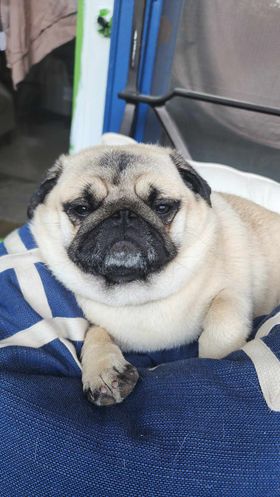 On the other hand, this horror story has a happy ending thanks to Risa's (she now has a new name) amazing new owner. Risa can now live the life she was meant to live. She loves everyone she meets ... dog or human ... and she has never met a stranger. She is a happy, jolly, funny pug and we pray she has many more years full of joy and love .... a long, full life to make up for her first horrid year of life. We hope she will forgive us for placing her with this horrible first owner whom we totally misjudged. We hope she remembers that we loved her, love her still, and will always love her, until we meet again at the rainbow bridge. So, hopefully, "Risa's Revisions" will help prevent future puppies from suffering the same fate Risa the pug endured. Hopefully, these revisions will provide future puppy owners with the resources to prevent them feeling the need to surrender a healthy, loving, purposefully bred, puppy culture raised, amazing 10 month old puppy to a kill shelter. This is why we have the following clause in our contract, to help the owner: "Buyer agrees that if they are unwilling or unable to keep the pug involved in this contract at any time during the life of this pug, the Buyer will return the pug to the Sellers. [Jeff and Amy would come get the pug]. This means that, for the life of this pug, the Buyer agrees not to sell the pug to any buyer, nor to give the pug away to another owner other than the Sellers without the Sellers’ consent. Buyer agrees to never surrender this Pug to a shelter or rescue group."
As we recently stated in a post in our Pickwick Owners' Private Facebook Group: "If you are ever in doubt that you can no longer care for your pug, for whatever reason, please honor your contracts and let us help you. We will come get your pug … no judgement, no regrets, just moving forward. We know life happens. Please do not ever surrender your pug to rescue or a shelter. It is not necessary." Risa was almost euthanized when she was not even a year old. She is an absolutely amazing pug. If only her owner had reached out to us, or any of his amazing Pickwick family. The Pickwick family is filled with marvelous humans (and pugs!). It's also a fabulous resource, not to mention the pug family at large. Don't despair. We are always here for you throughout your pug's lifetime if you ever have any questions. If we don't know the answers, we can find someone who does. |
AuthorAmy - Concert pianist, composer, lecturer, teacher, adjudicator, pug lover, dog trainer, soap and candle maker, PawTree Pet Pro, and co-owner Pickwick Pugs along with her husband, Dr. Jeff McLelland who is a concert organist, music director. Archives
April 2024
Categories |
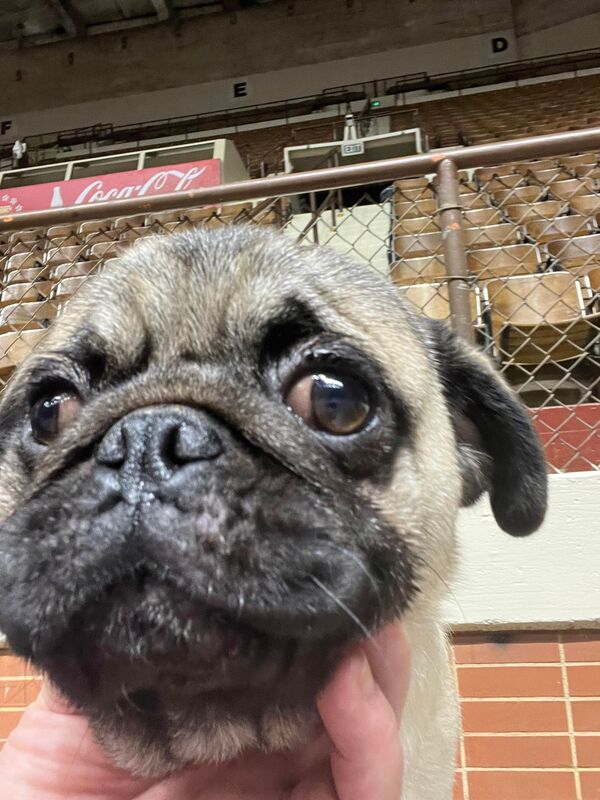
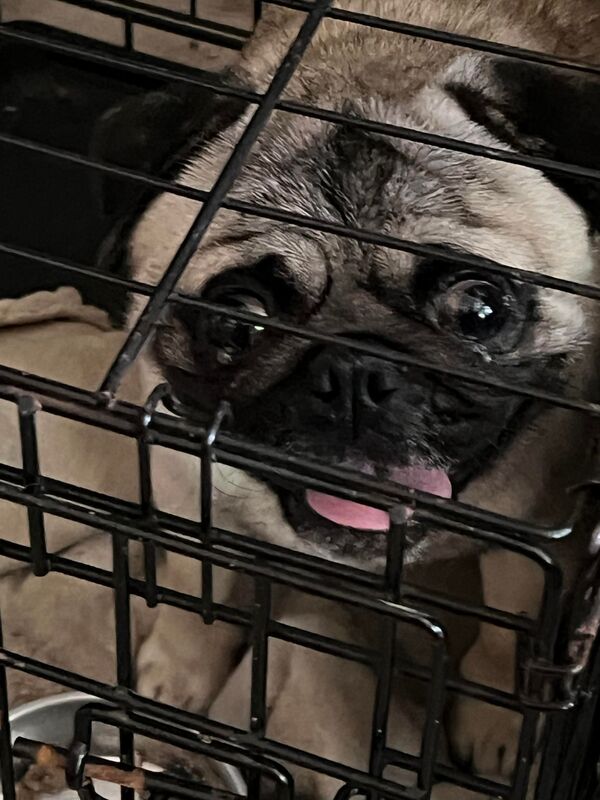
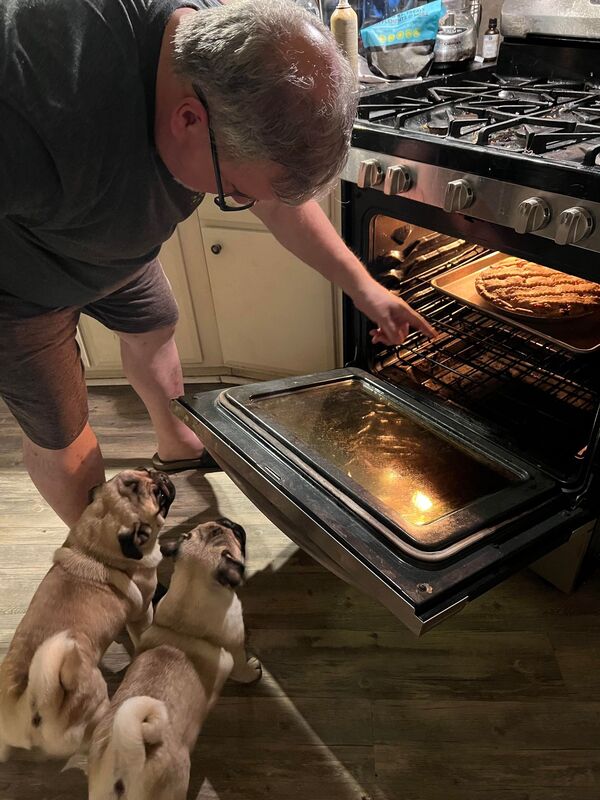
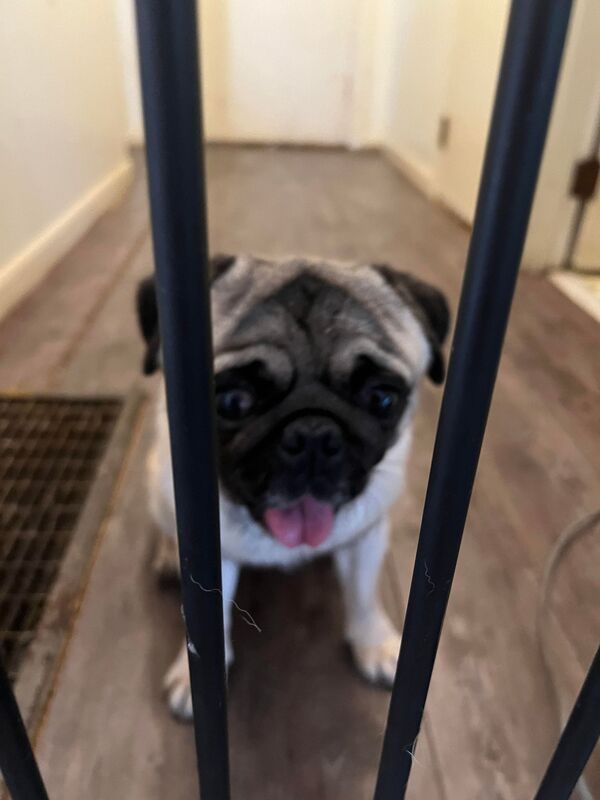
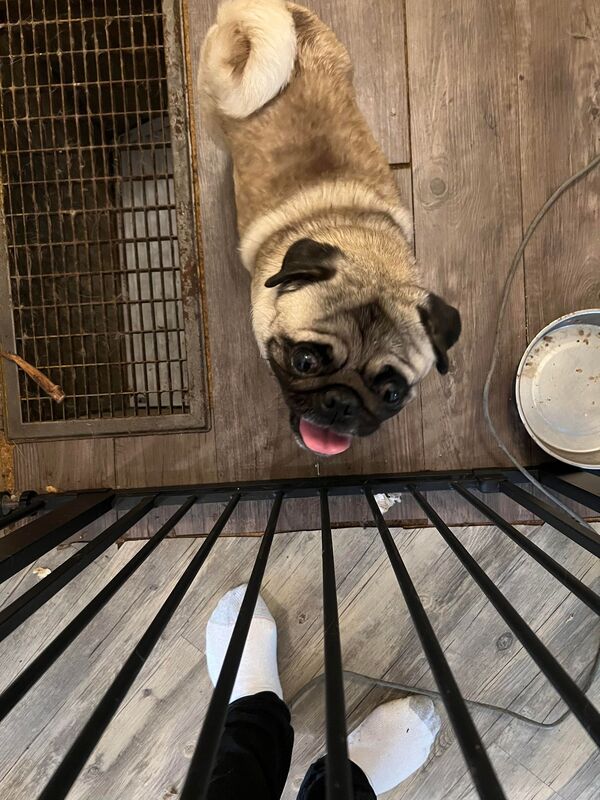
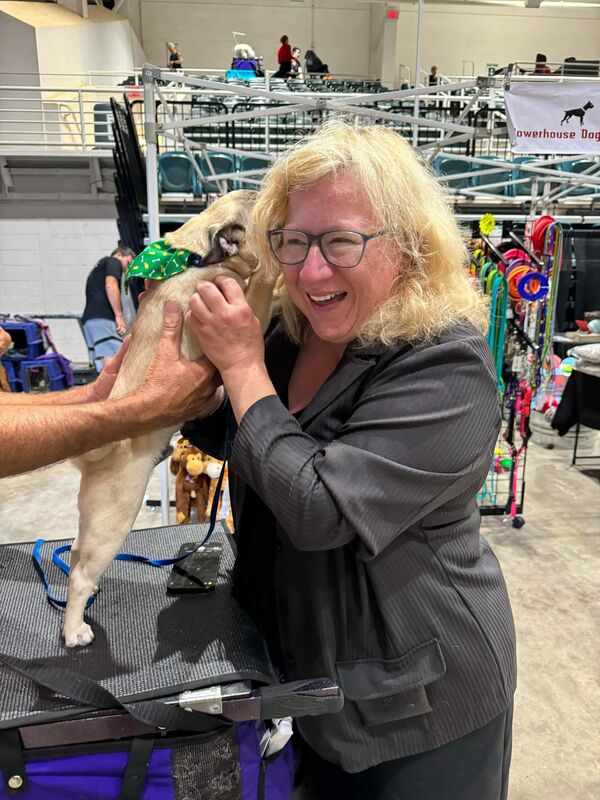
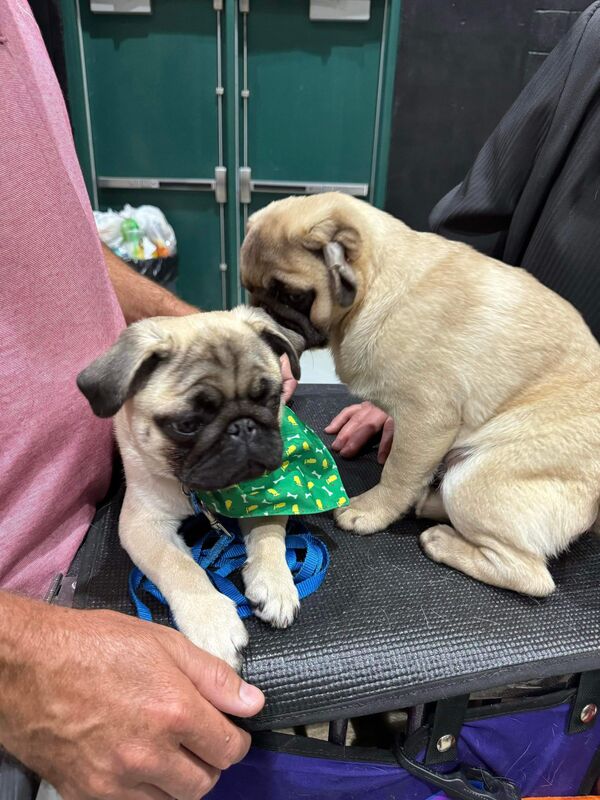
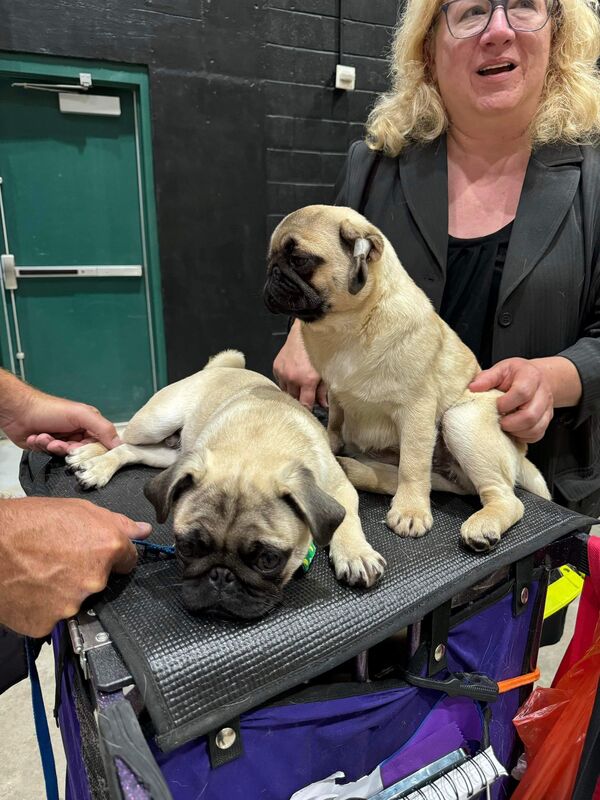
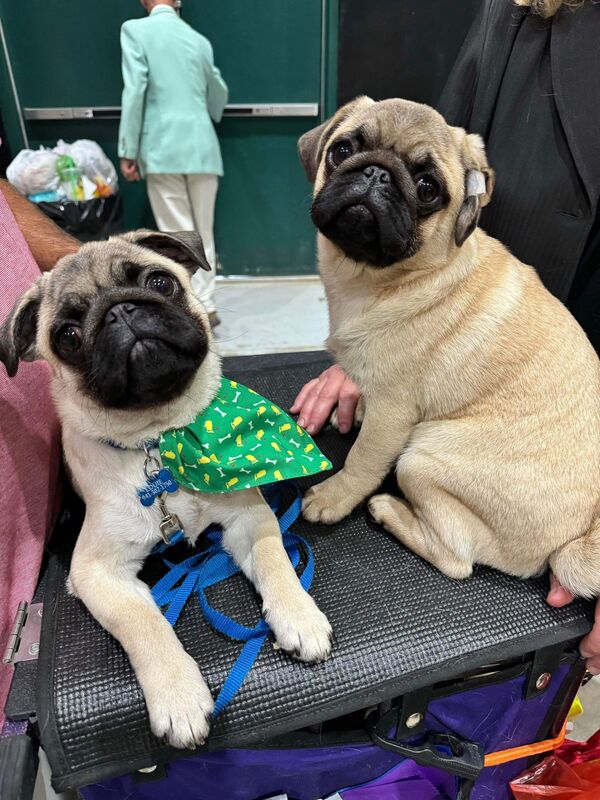
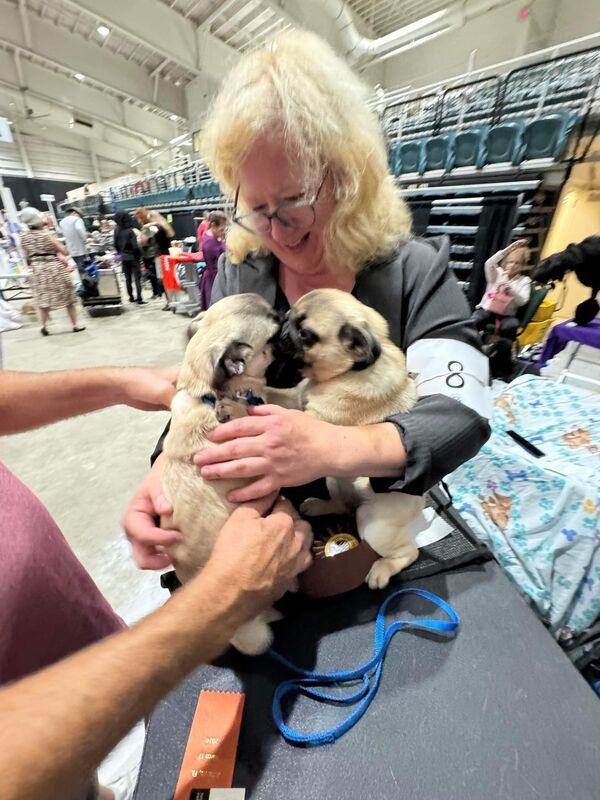
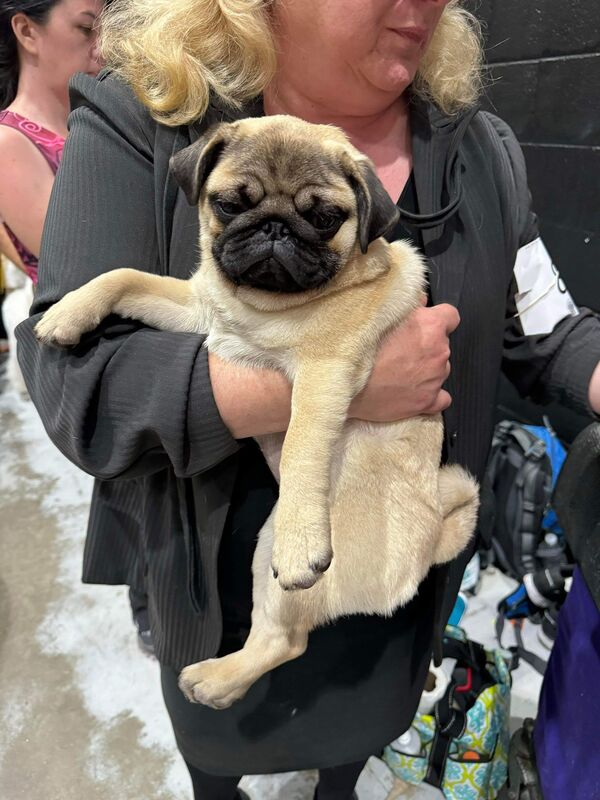
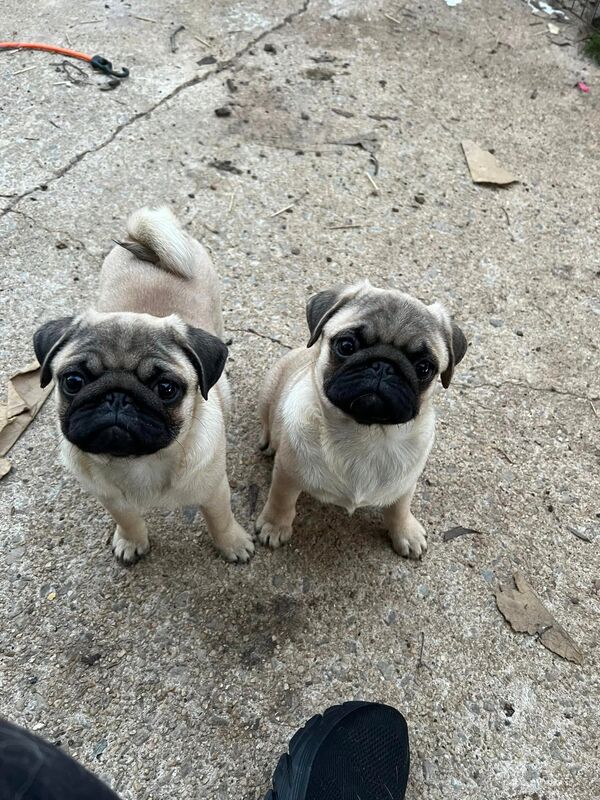
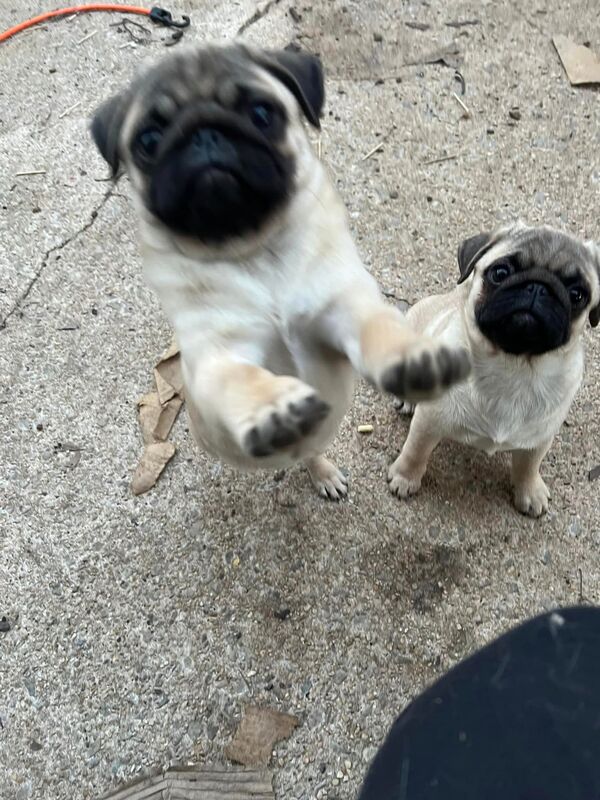
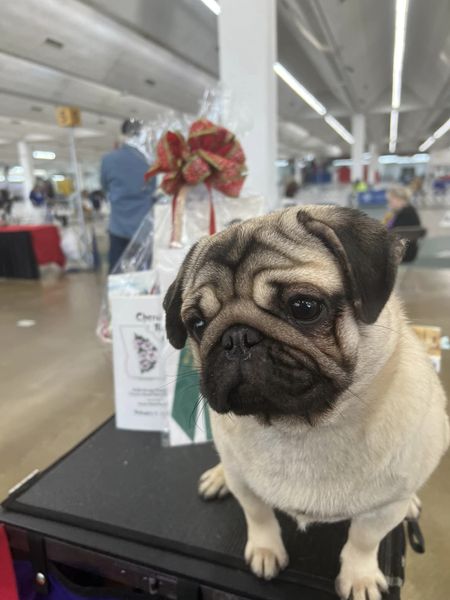
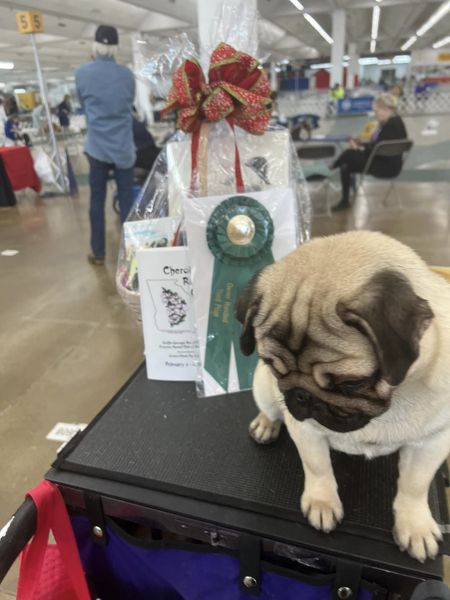
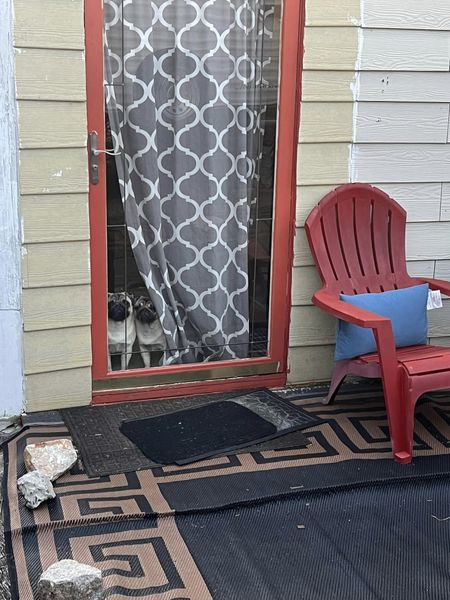
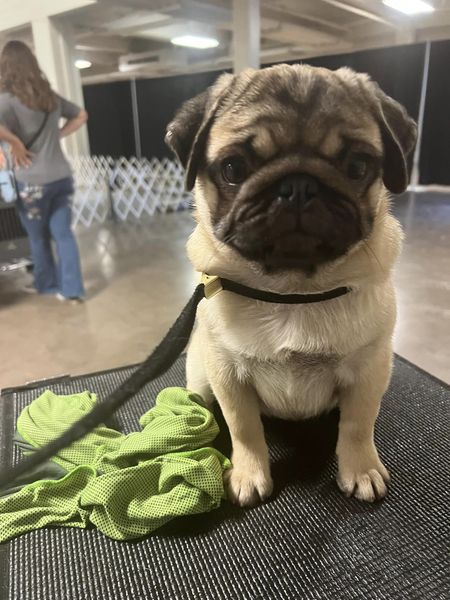
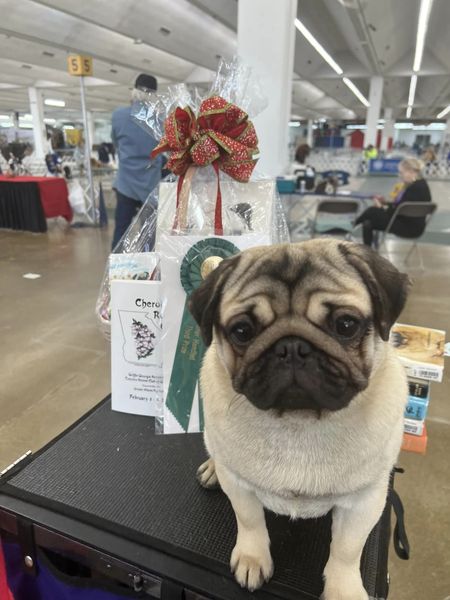




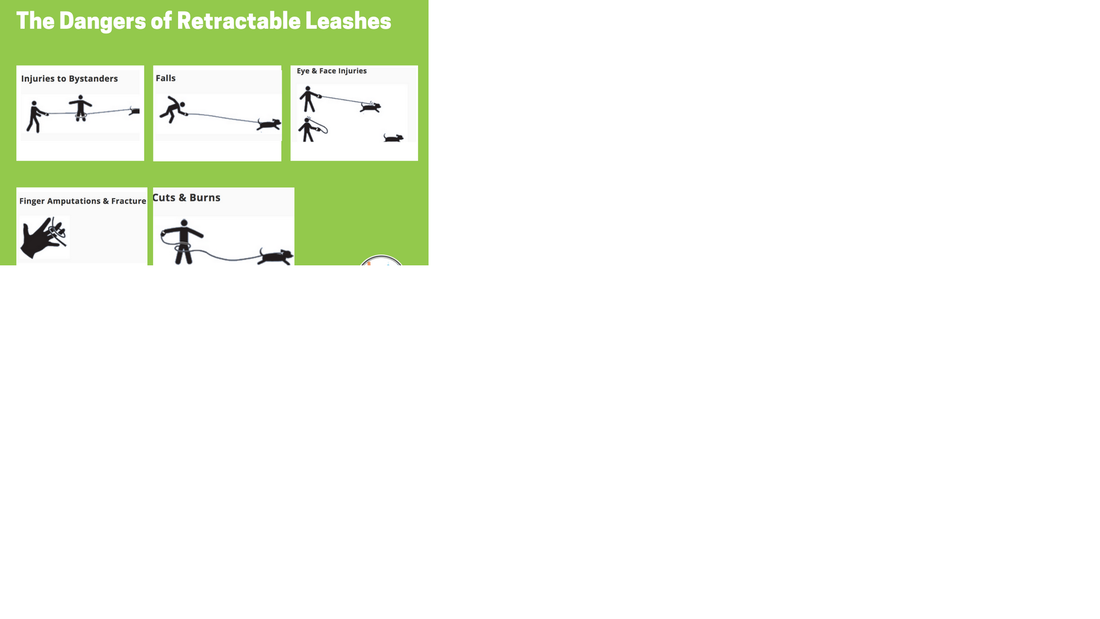
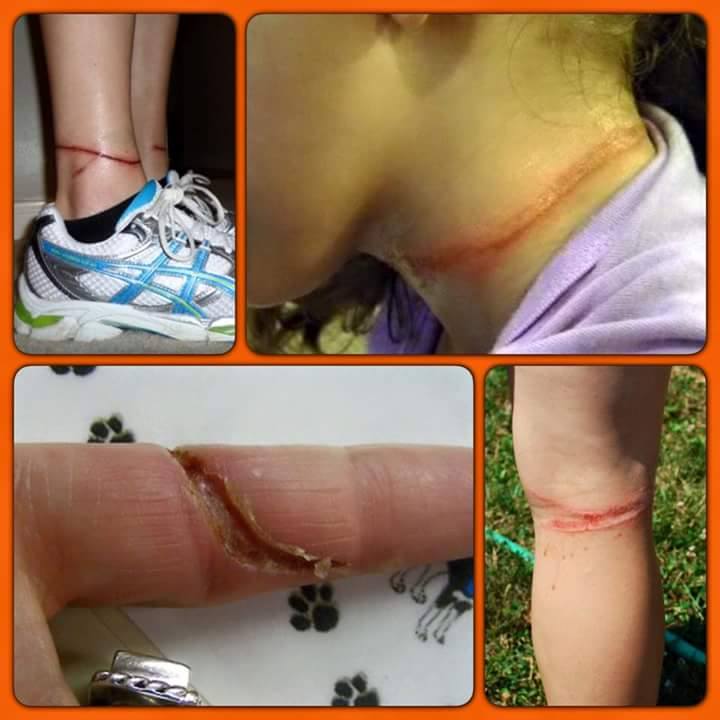
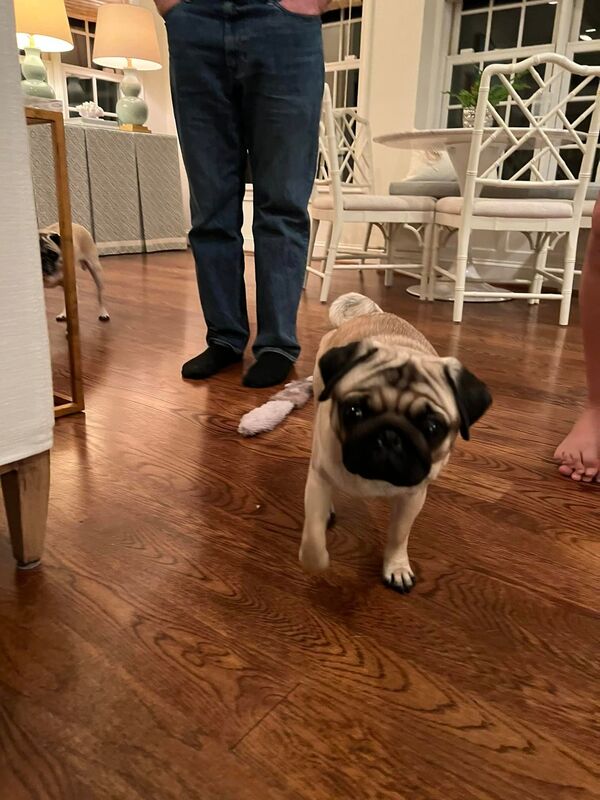
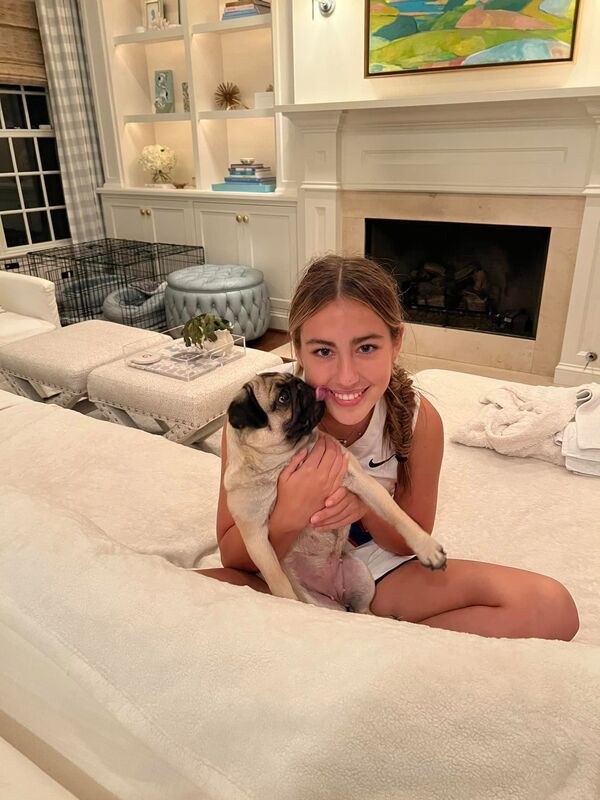
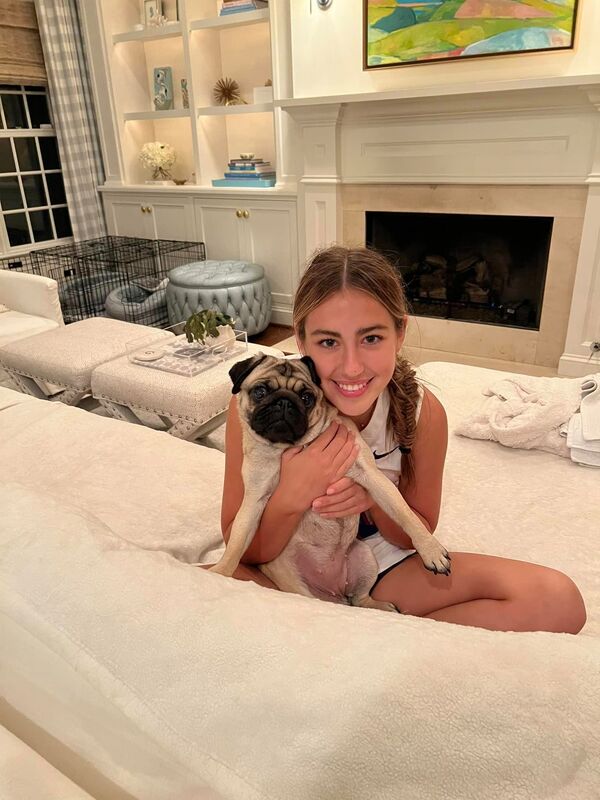
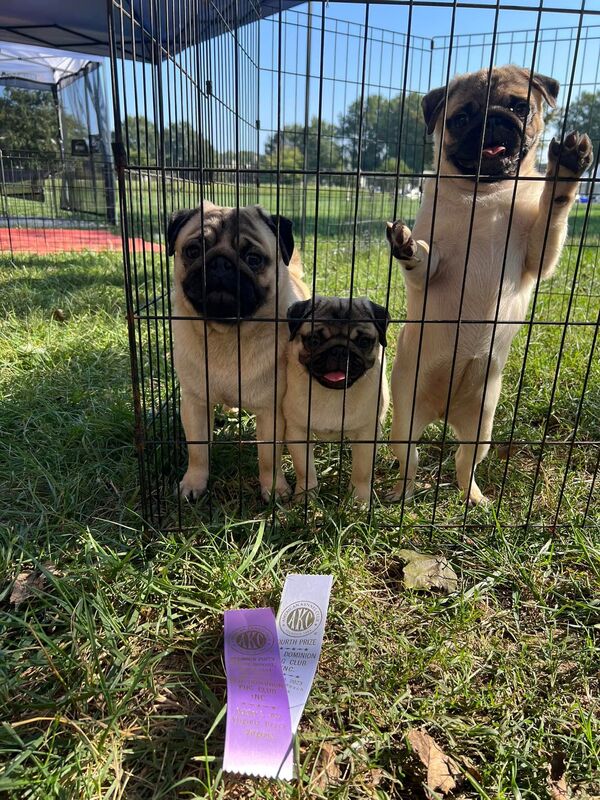
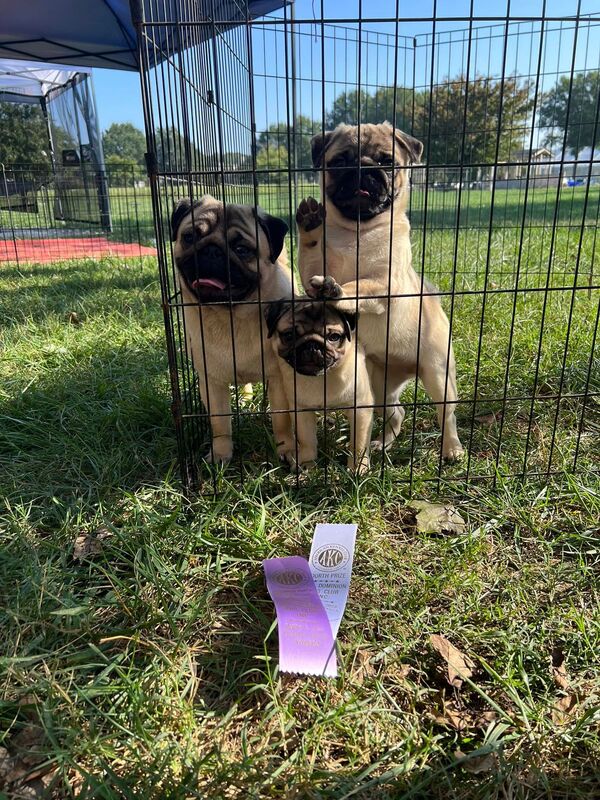
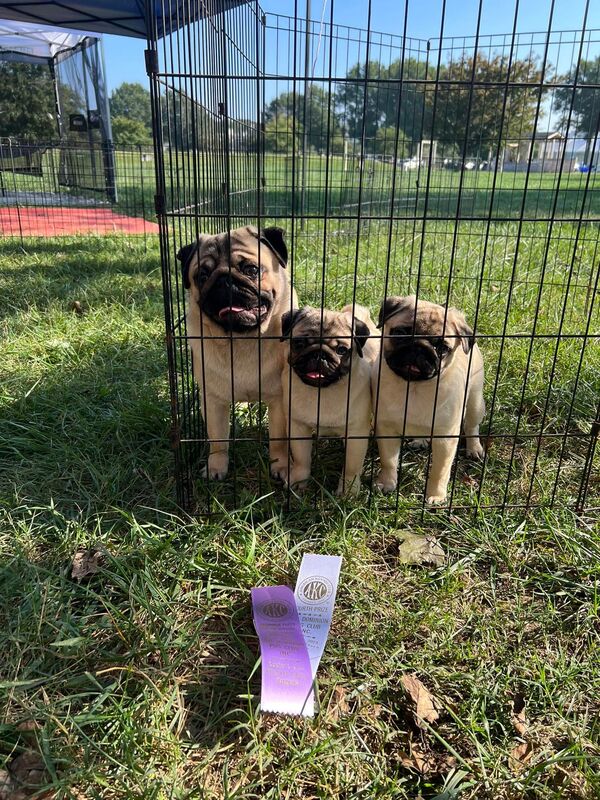
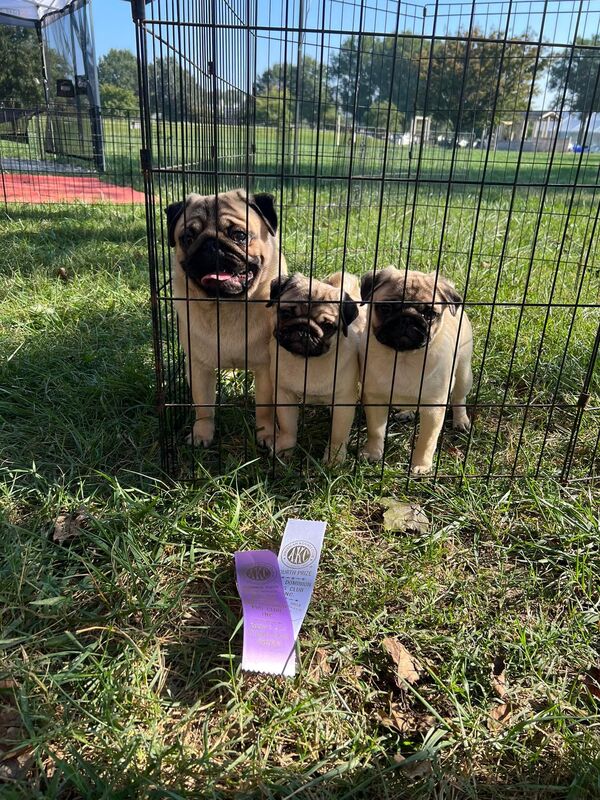
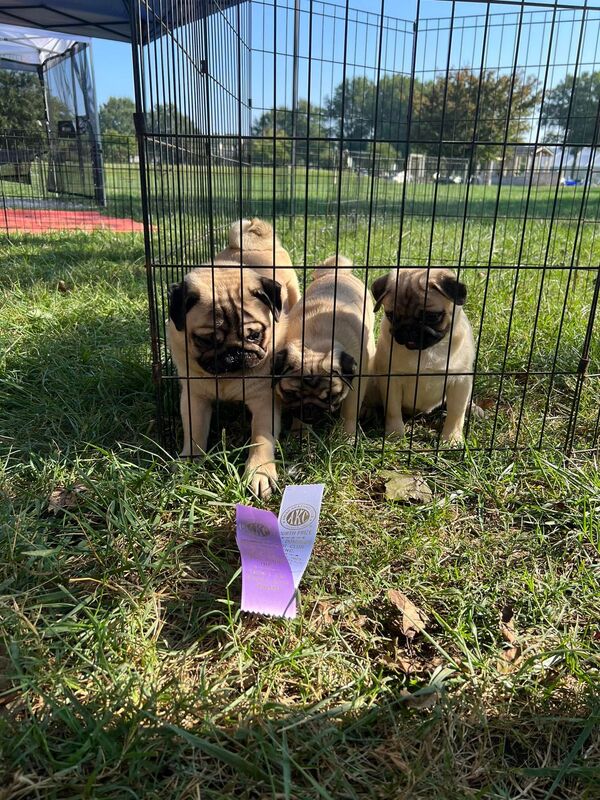
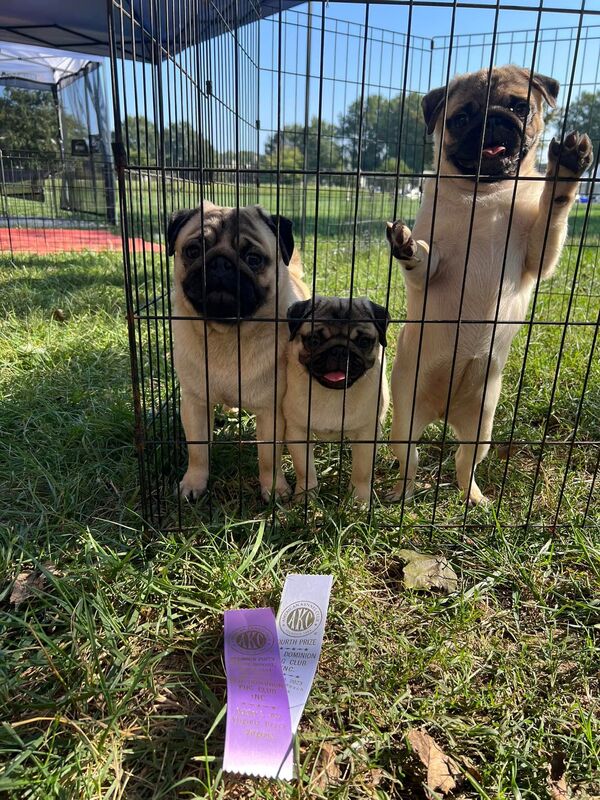
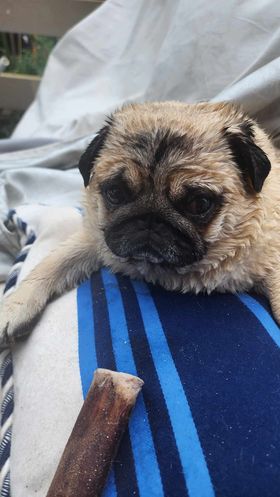
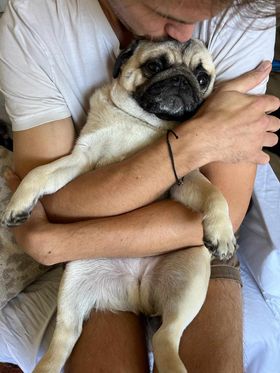
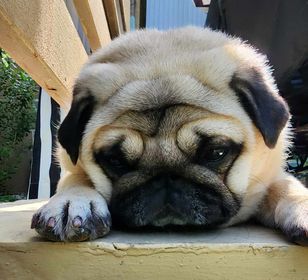
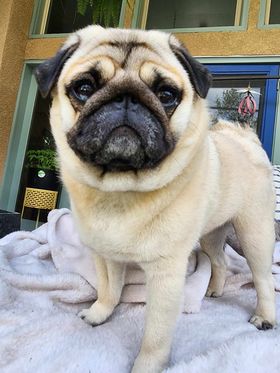
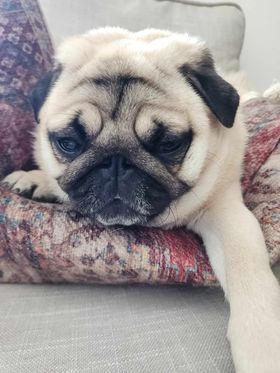
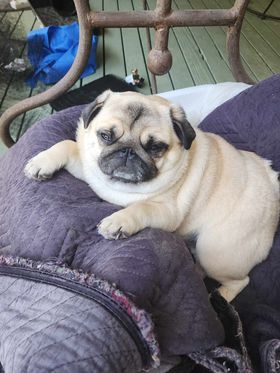
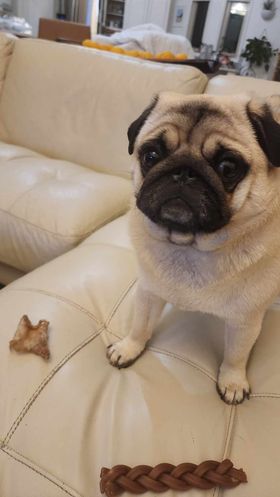
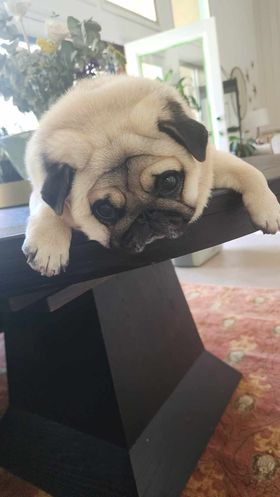
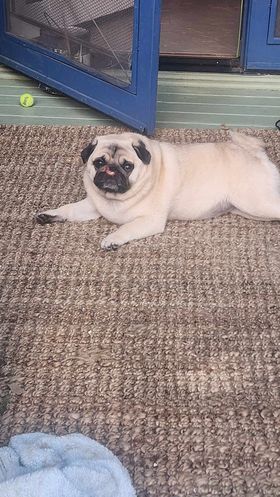
 RSS Feed